Jamel Shabazz – Prospect Park
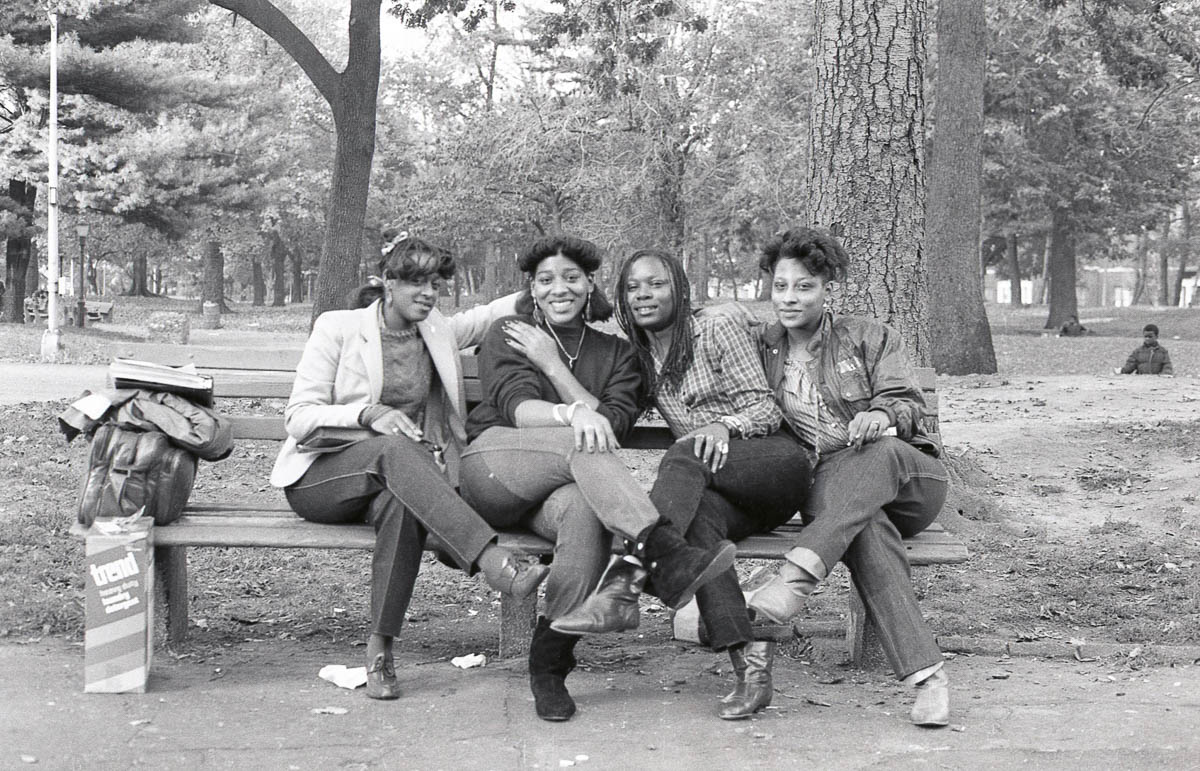
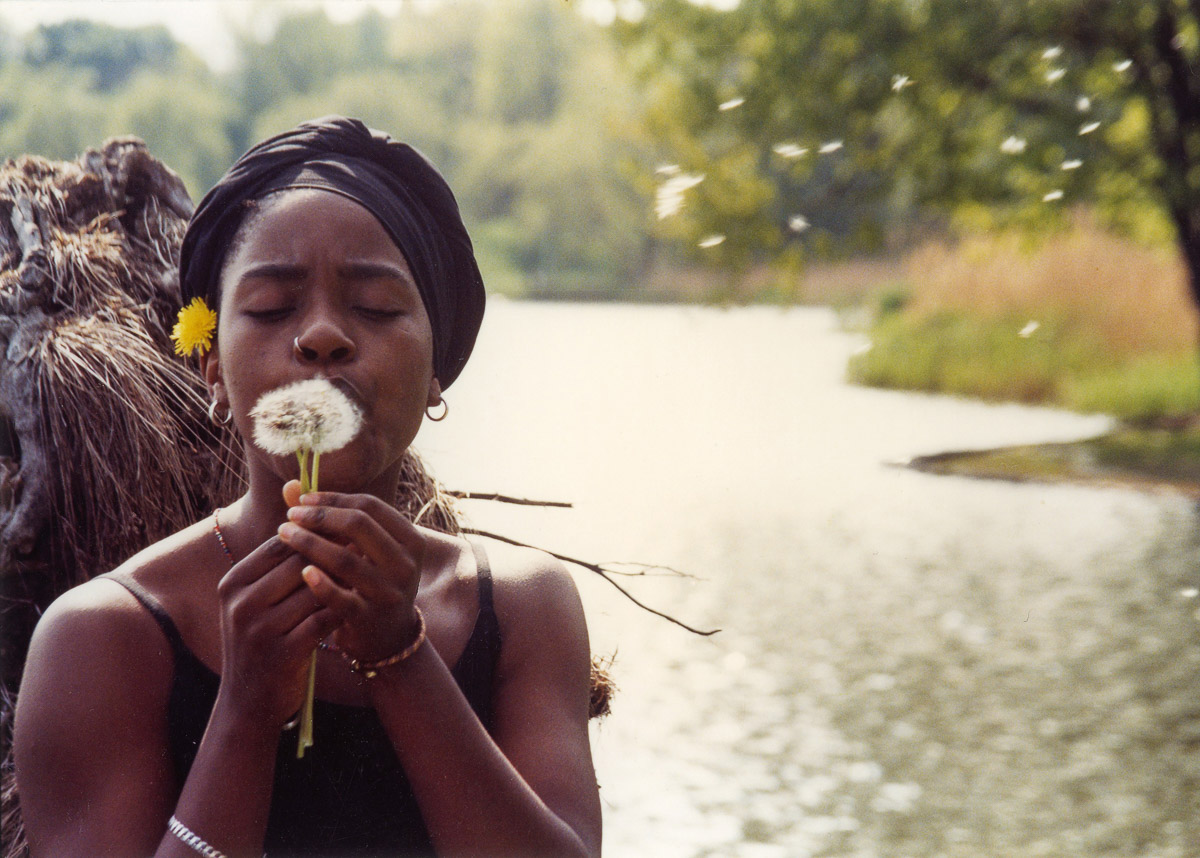
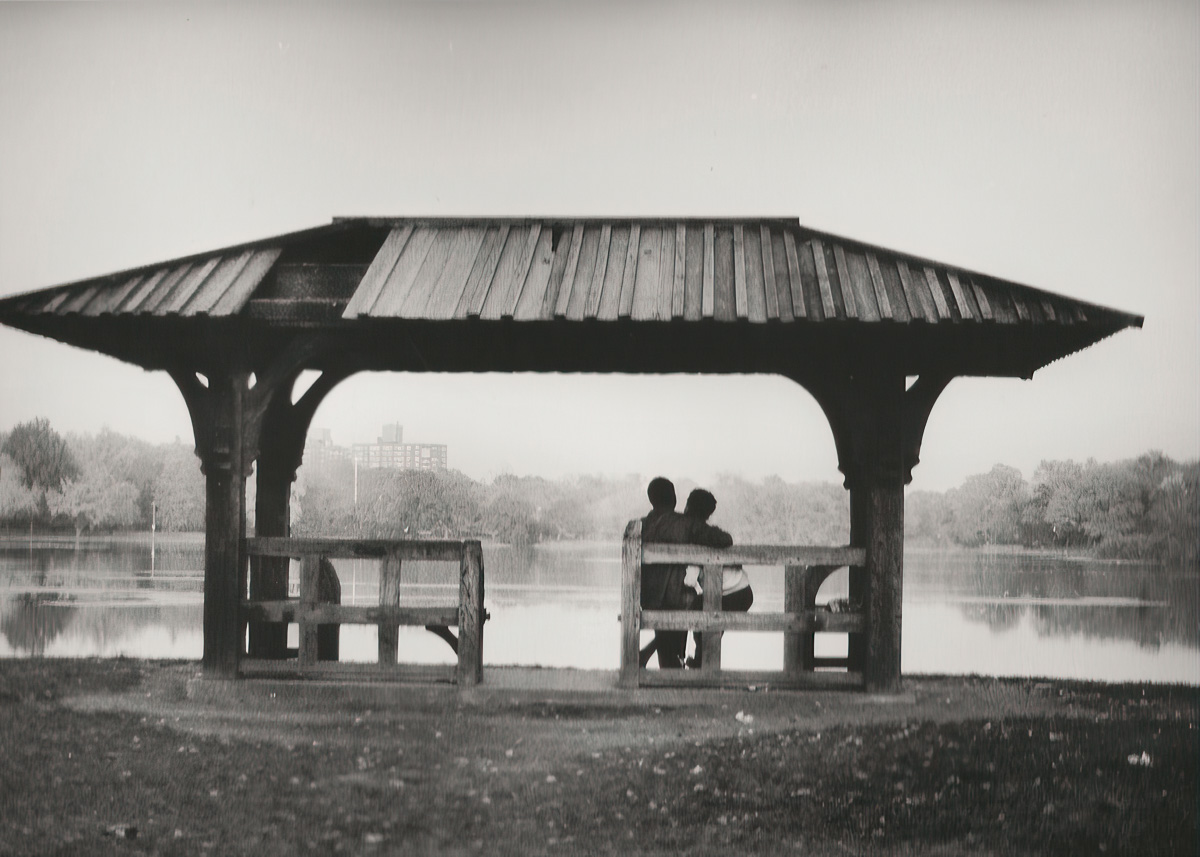
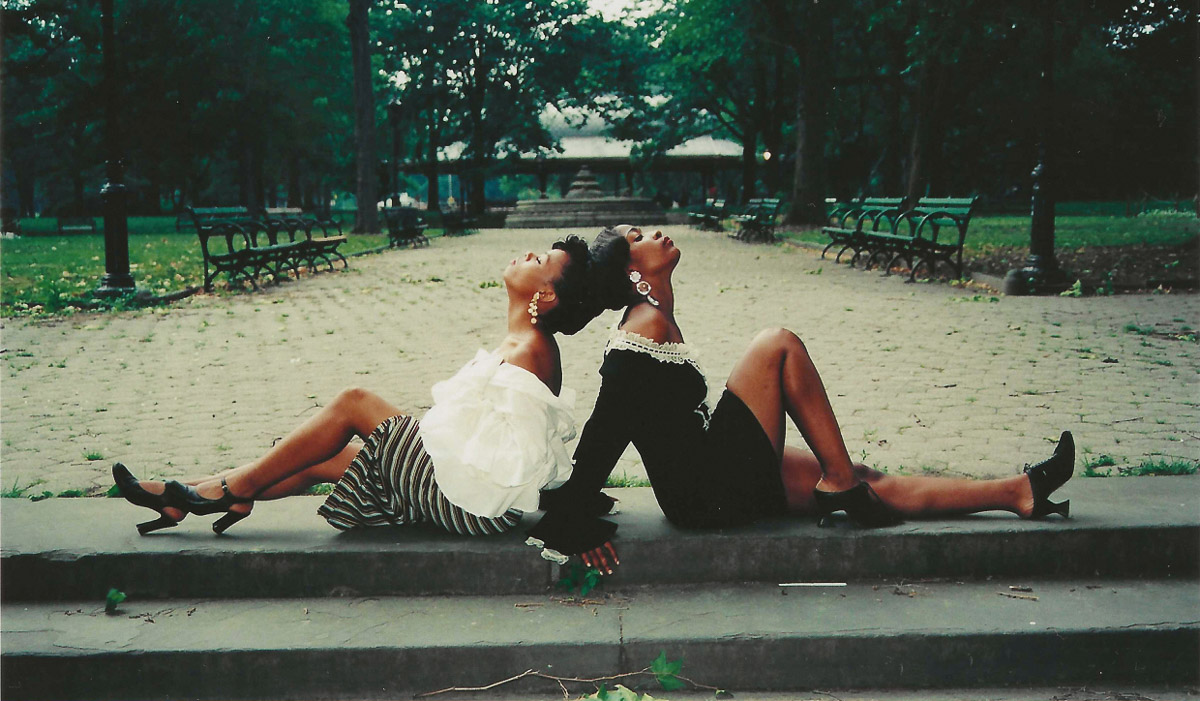
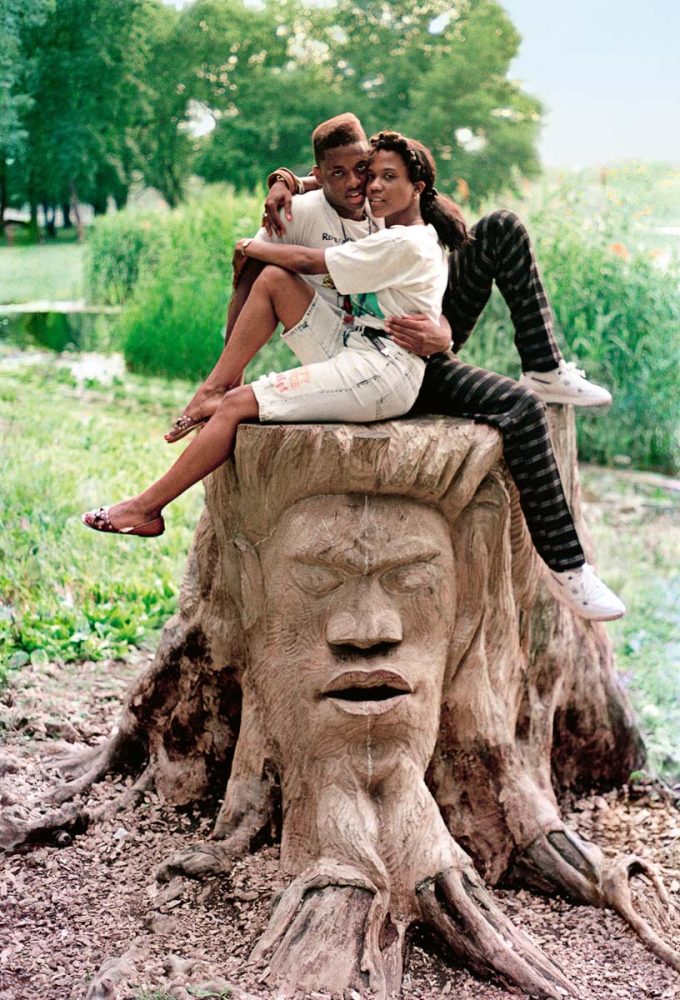
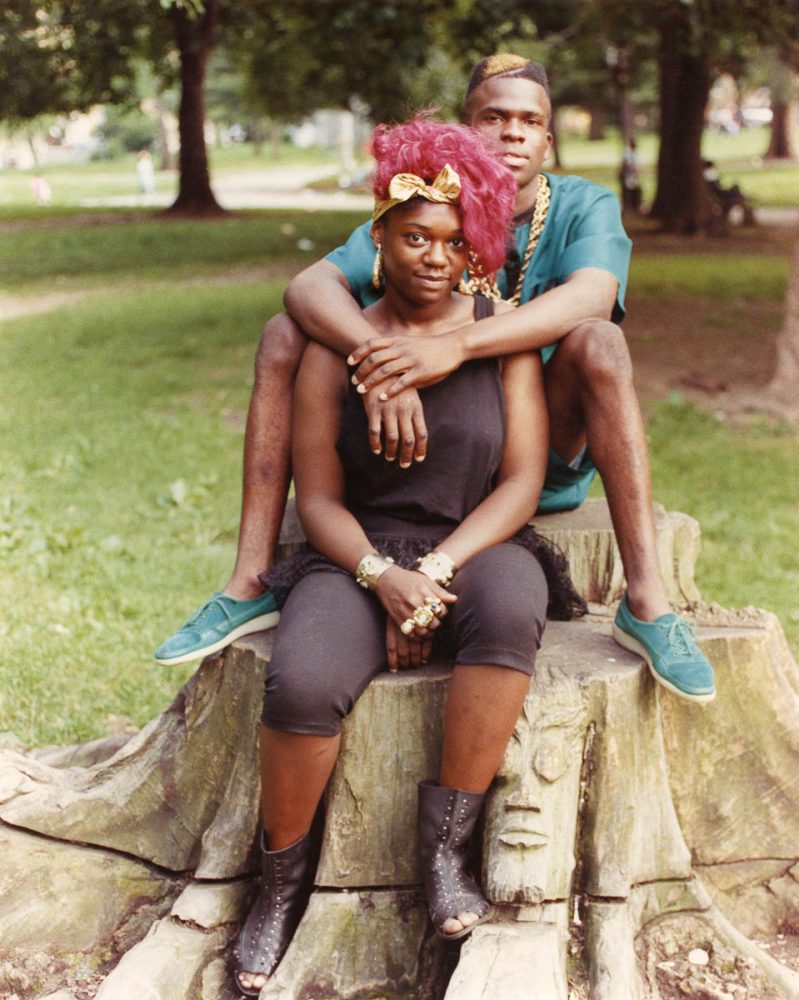
Jamel Shabazz belongs to that category of photographers who are observers and participants of the culture they document. His books represent a kind of visual diary, except that, unlike most diaries, they have become public history. Shabazz’s methodology can be described as one of accumulation, often over decades, resulting in image archives that construct a complex depiction of places across the greater New York area. In the case of Prospect Park, the pictures were made between 1980 and 2025. As such, the rigour comes from the act of being there, open to capturing what the world has to offer, and not just from technical consistency. Influenced by photographers like Leonard Freed, whose book Black in White America (1968)provided a multilayered account of racial divisions, Shabazz has taken an active stand against reductionist views by focusing on the positive aspects of black communities. One way in which he has achieved this is by documenting how fashion and leisure define identity. As in his previous books, Shabazz proves to be an empathetic witness of history with a gift for portraits that capture the joy of being alive.
Arturo Soto: Brooklyn is a highly multicultural city, and Prospect Park has long served as a gathering place for the Black diaspora. What has that meant to you as you photographed the park?
I can honestly say that my photographs of Drummer’s Grove and Prospect Park itself, are some of my most important and diverse bodies of work in my entire archive.
Jamel Shabazz: It was my introduction to Drummer’s Grove, as a sacred ancestral ground and space where musicians, mainly percussionists from the Black diaspora, would gather on Sunday afternoon during the summer months, that changed my life spiritually and as a photographer. That one location provided me with an array of people to photograph, from the musicians, vendors, families, and curious onlookers. There was so much culture and diversity in that one little space, that I could stay there all day and shoot and never get bored. Over the years I have formed friendships with many of the people who would come out, and many of those friendships are still going strong today. I can honestly say that my photographs of Drummer’s Grove and Prospect Park itself, are some of my most important and diverse bodies of work in my entire archive.
AS: One of my favourite pictures is of your father bird watching. Beyond its beautiful use of colour, it shows how the park resonates with you on a personal level. You call it your muse, as if it were a person, but it has also been a refuge. Is there something spiritual about the park for you?
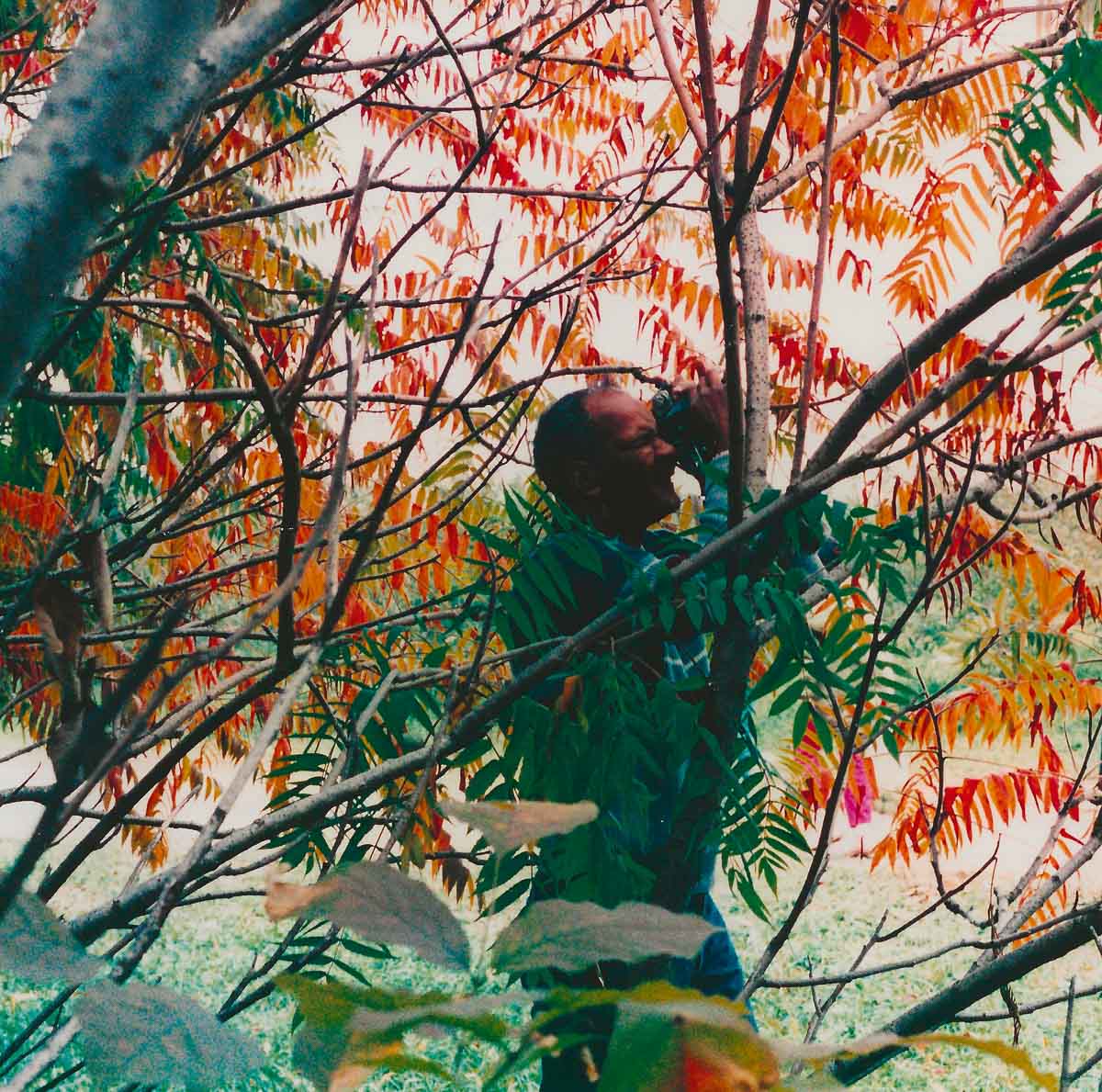
JS: I often refer to Prospect Park as my oasis, reason being, it has offered me a special space where I can venture to, to separate myself from the noise and constant hustle and bustle of life in a busy city. What I find highly spiritual in the park is the quietness, serenity and natural beauty that surrounds it. Experiencing those three elements has a way of releasing the endorphins in my body, fostering feelings of joy and inner peace. There is no question that going to Prospect Park for over fifty years has contributed immensely to my spiritual development. As I reflect on what drew me to Drummer’s Grove in particular, it was the positive ancestral energy coming from the wide mix of percussionists led by a spiritual conductor. That cultivated a harmonic frequency in me that fed my soul and reinvigorated my spirit, thus providing me with a sense of balance to continue on this journey called life. The photograph of my father was actually taken by my younger brother who is also a photographer, and who was taught by him. The photo captures my father in Prospect Park with his treasured Nikon F camera focusing on a bird in the tree. It’s a very rare photo, and probably the only photograph that I ever saw of him actually shooting. Having that specific photograph in the book was my way of honouring both my father and brother.
There is no question that going to Prospect Park for over fifty years has contributed immensely to my spiritual development.
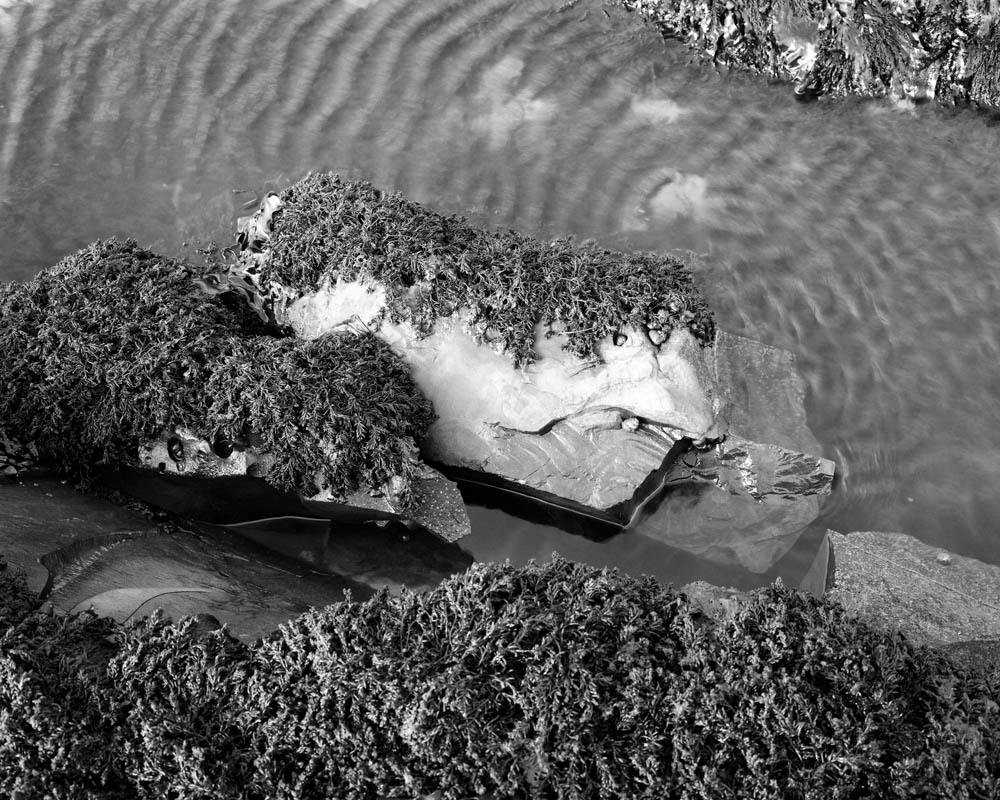
AS: Photographs of spaces are not very common in your work, but this book includes a few of the park itself. Does this signal a new direction in your books?
JS: It is not a new direction at all, as I actually started out photographing various spaces during the early stages of my development as a photographer. It was my father, a professional photographer, who first directed me to photograph street scenes as a theme. Over the years, I have built a sizable number of photographs all centered on spaces; that work spans from the United States, throughout spaces around the world; many of them have never been published nor exhibited and it is my hope in the coming years to put out a book focused entirely on that body of work.
AS: Except for your street photographs, in which you capture fleeting moments, you seem to make portraits of people as if they were your friends. How do you achieve that proximity?
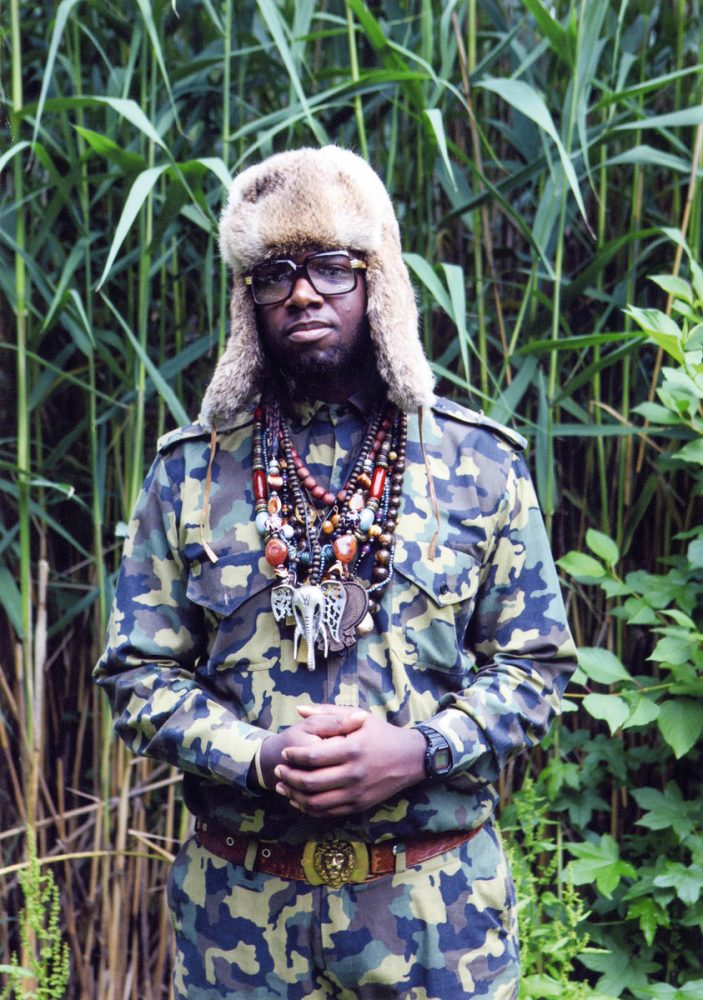
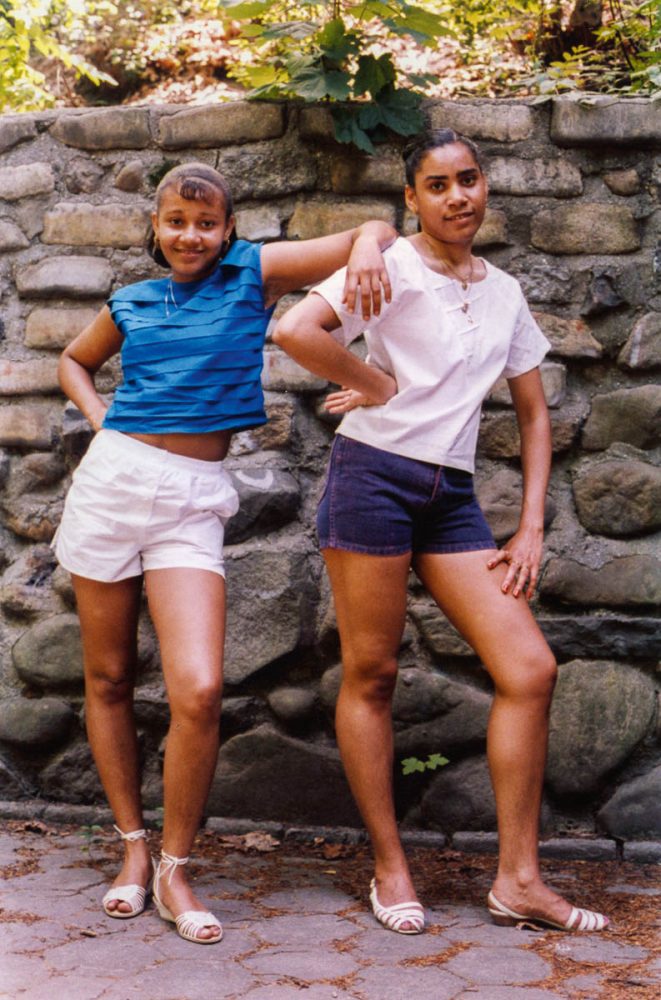
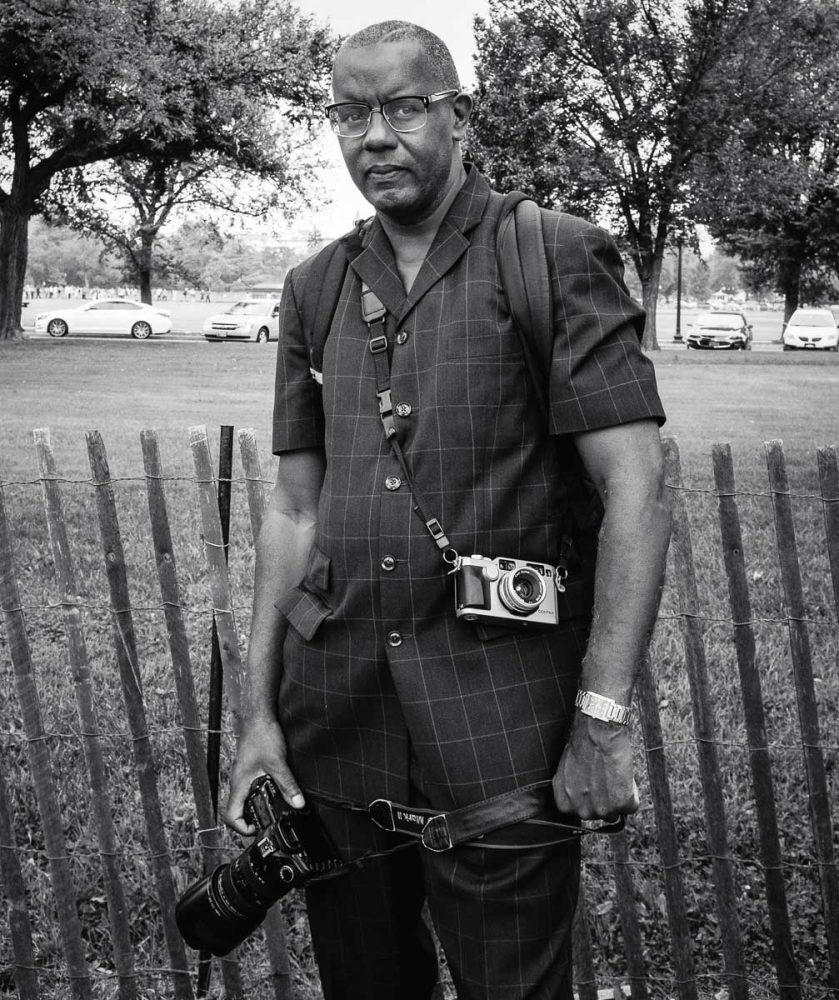
JS: My ability to create portraits of people that appear to be friends, is centered on building trust with everyone I photograph. That trust is essential in documenting the essence of those I photograph, which is oftentimes reflected in their facial expressions or body language. My process, whenever possible, was to show my portfolio to folks who I sought to photograph, which I made a point to always conveniently have with me and that portfolio would consist of about twenty of my best photographs. The purpose for that was to show them that I was legitimate and sincere. Once they viewed those photographs, they were open. What built lasting relationships over time and allowed me more access, was the fact that I would return the following week and give people a nice 4” x 6” print at no charge.
AS: You have written before that some of the good in the world has escaped photography, but it can be a challenge to represent subjective notions through pictures. Can “goodness” be captured in a pose or a smile?
JS: What I noticed over the years about how people looked in photographs, primarily, but not limited to folks in New York, was that they were not smiling and didn’t know how to pose. When I was out photographing people, I made the experience enjoyable. Posing became a part of my creative process that challenged my subject/subjects, inspired them to be creative and participate in the collaboration. The smiles that you see in many of my photographs were the responses that people gave back to me based on the energy I would give off to them. So, in regards to your question about “goodness,” being captured, it all depends on the frequency of the photographer and how the subject responds.
AS: What does authenticity mean to you, given that this concept is often used to describe your work?
JS: I interpret authenticity as being my particular signature style of photography. My ability to connect with strangers, making them feel comfortable in front of the lens, is often reflected in the photos, along with my incorporation of the urban landscapes as a background to my photographs that give the images more gravity. When I speak of gravity, I like to make images that reflect the energy of the person or persons I am photographing. Sometime in that image making process, posing which most folks view as my specific aesthetic is how my work is deemed authentic, and different from other photographers.
AS: Do you ever think or care about sentimentality when making a portrait?
JS: Yes. In my creative process, I do think about the long-term effect, and the sentimental value that the photos I make will have as time progresses. I often shared with those who stood before my lens “That it may not make sense now, but it will later on in life.” That point has been proven to be true, time and time again, especially when I reconnect with so many of them and hear the backstories behind the photographs and what has transpired in their lives over the years since first making the image.
AS: You have described “drama and flava” as defining elements of a powerful image. Do you think those categories carry over across cultures?
JS: Yes, one hundred percent. The concept is not limited to a particular group of people, even though some folks might have a little more than others, but as a creative I know how to bring the “drama and flava” out in people across cultural lines. In some cases, it just takes a little bit more time and patience. With my particular point of view, I am interested in knowing about the people that I photograph and the cultures they embrace. My journey as a photographer has allowed me to meet so many people throughout the years from different communities and cultures, particularly in Prospect Park. My interest in people was largely inspired by reading National Geographic as a child. That one publication exposed me to a larger world outside my neighbourhood, providing me with a greater understanding of where people came from, to a point that when I met people in my travels, I could tell where they came from, either by their accent, or attire. Having a basic knowledge of other cultures was very instrumental in my ability to photograph people outside my community and this country.
AS: How do you think your pictures are read outside of the US? What do you think the images in this book say about American culture?
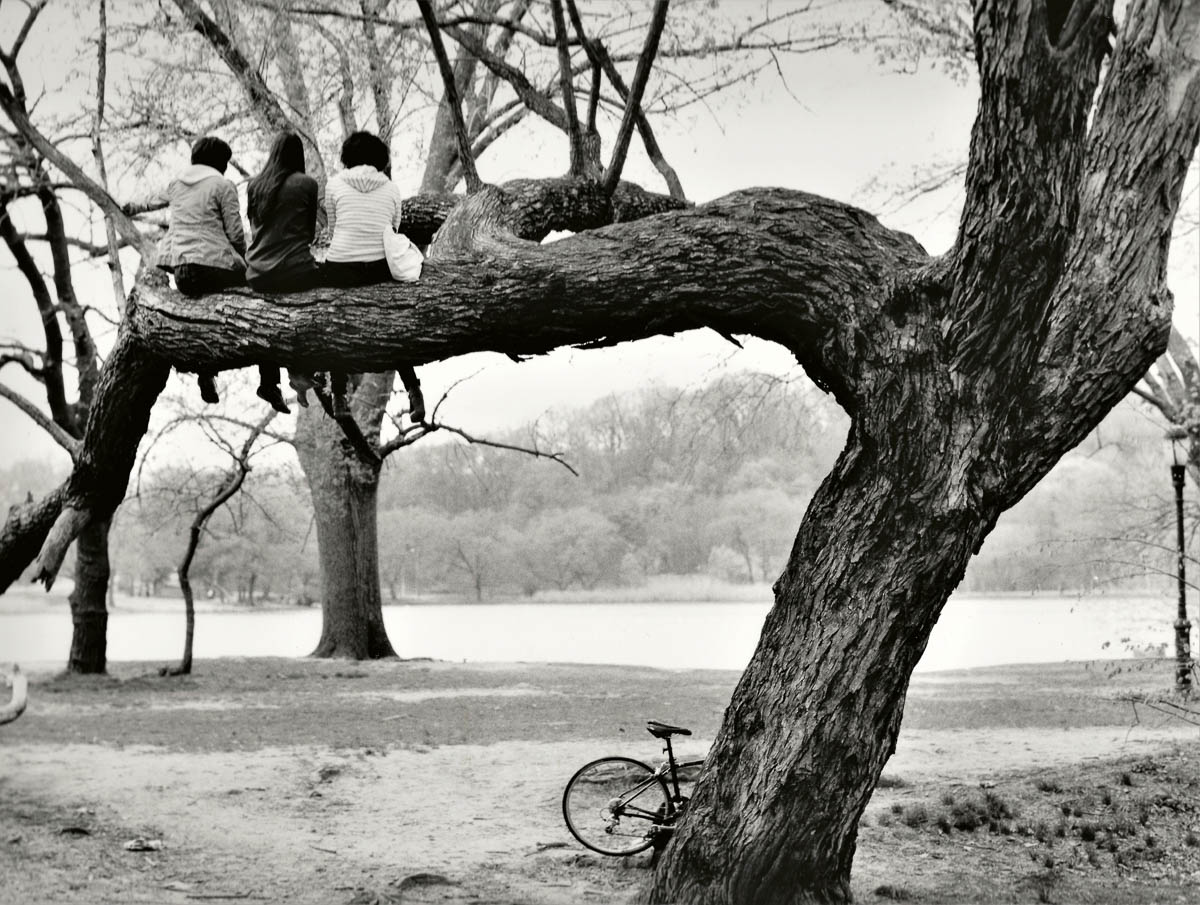
JS: I have been fortunate to have exhibited my work in a number of foreign countries throughout the years. The response from many of the viewers has been extremely favourable and amazing. In most cases, they have never seen images of American culture celebrated in such a manner. What I found most fascinating is the fact that a number of people from outside the United States have told me that after seeing my photographs they were inspired to visit New York. In some cases, they relocated to New York largely based upon how they saw my documentation of my community and New York City overall. Regarding your second question, I feel that the images in my book show another side of New York City that is not often shown in the mainstream media, but more focused on sensationalism or the ills of society. In Prospect Park, I show the humanity of everyday folks enjoying themselves in a peaceful and natural environment.
Normally I am reluctant to write, but for this project, I felt compelled to speak from my heart, and allow the reader to understand the depth of my connection to the park.
AS: Prospect Park features a historical timeline of the park and other texts by different contributors (as well as one by you). How would you describe the role of writing in your books?
JS: The various contributors to this book helped to shed greater insight on the park and myself as a photographer. Including my piece was important, as it provided me with an opportunity to help the reader better understand my personal journey and why the park means so much to me. Normally I am reluctant to write, but for this project, I felt compelled to speak from my heart, and allow the reader to understand the depth of my connection to the park. During the past few months, I have been spending a lot of time revisiting my archive, of not only my photographs, but my writings going back over 40 years.
Most of these writings are in my journals, something that my professor at college encouraged me to do. With my father instructing me to carry a camera everywhere I go, my professor instructed me to always carry a notebook and pen, and write down my thoughts whenever possible.What I find so profound about these writings are the intimate feelings I was transcribing on paper. Many of the thoughts I was conveying came from experiences I had either at work or observations I made during my many travels. Most of the writings mirror so much of what I was photographing at the time, and in most cases shortly after making a photo, I would find a quiet place and write my thoughts down.
I am amazed with how these thoughts are all dated, and very descriptive. The writings vary from being in a new relationship to my frustration with society. Since reviewing my writings over the many decades, I now plan on including many of them in my future book projects. In the past I have invited writers to write essays in my books, and they all did a great job, but today I see the relevance of having my personal and original writings accompany my photographs, thus providing greater depth and meaning. Having text is an additional part of my creative process, providing the viewer with a deeper understanding of who the person / persons is in the frame, and a little background information. As far as text’s role in photography, for some it is a debatable conversation. A lot of photographers don’t like text to accompany their photographs, they prefer to have the photo speak for itself, while others like to give more depth and clarity by including text. For me it’s important to now include text in all of my projects, mainly due to how my work is often misinterpreted. I find that by including my words, the viewer has a much greater understanding of work and overall vision.
AS: Music has played a crucial role in your work, and several of your books come with a playlist, suggesting that music conveys aspects that transcend the realm of the visible. What are those things for you, and what songs would you recommend for this book?
JS: Music has always played a major role in my creative process. Throughout my photographic travels, my music has been with me in some form or fashion. The music I select puts me on a certain frequency that places me in a particular creative zone, thus inspiring what I photograph, and for every photograph I make, there is a song that perfectly accommodates it. Samples of those songs can be found throughout my Instagram posts. If I were to create a playlist for my Prospect Park book, the following ten songs would reflect my personal journey in the park for the past fifty years.
1 – “Grazing in the Grass,” by Hugh Masekela
2 – “Searching” by Roy Ayers
3 – “Warm,” by Lonnie Liston Smith
4 – “Summer Madness,” by Kool and the Gang
5 – “Let the Children Play,” by Santana
6 – “Earth Wind, and Fire,” by Earth Wind and Fire
7 – “In Search of Truth,” by Lonnie Liston Smith
8 – “Rivers of my Father,” by Gil Scott-Heron
9 – “La Costa,” by Natalie Cole
10 – “My Favorite Thing,” by John Coltrane
Jamel Shabazz
Prestel 2025