Cuny Janssen – Portraits/Landscapes, Macedonia
“On my last evening, Sašo and I sit in the garden of Georgi Marjanovski, a professor of law and one of Macedonia’s great liberals. We talk in the darkness, listen to the crickets who click their legs in time with a festival in the distance, the full-blooded celebration of a Romani marriage in Europe’s gypsy capital. If the fire of prejudice could be doused with a portion of tolerance, the Balkans would be the most wonderful region in the world.”
Misha Glenny, The fall of Yugoslavia: The third Balkan War
“I prefer to be open and unjudged, like a child.”
Cuny Janssen
***
Director Milcho Manchevski’s 1994 film Prod dozdhot (or Before the Rain) is a tragic and beautiful story about three people in rural Macedonia: an Orthodox monk named Kiril who’s taken a vow of silence; an Albanian teenage girl named Zamira, accused of murder by her Macedonian neighbors; and Aleksander, a decorated Yugoslav photojournalist returning home from London. Running for her life, Zamira seeks refuge in Kiril’s room at the monastery. Kiril maintains his vow but still befriends Zamira and tries to hide her in his room. Aleksander’s story starts in London where an affair he’s having with a married magazine editor turns sour. He returns home to Macedonia to confront his own darkness. We learn he’s giving up photography because he condoned a murder, encouraging a compatriot to shoot an Albanian in the head for the camera; Aleksander thought it would be a powerful photograph, not fully recognizing at the time that it would tear his soul.
Back home, Aleksander confronts more of his past and seeks out a young Muslim woman, his first and only real love. An ethnic Macedonian, Aleksander is later killed by his own neighbors for pointing out the absurdity of their conflicts, and in doing so, admitting to his love. He tries to intervene and implores the men to stop their crusade against local Muslims, ultimately triggering their attack against him. The same mob, still blood thirsty, manages to track Zamira to the monastery and murder her while Kiril watches, chastising him for betraying his own kind for an Albanian, telling him that his ethnic loyalties should be greater than those for his god.
***
Most accounts of the fall of Yugoslavia don’t mention Macedonia, instead focusing on Serbia, Croatia, Bosnia, and Kosovo. Macedonia – or North Macedonia today – declared independence from Yugoslavia in 1991, just a few months after Slovenia and Croatia. The federal capital in Belgrade didn’t take much notice, its sights set on bigger, deeper conflicts with Croats and Bosnyaks. This isn’t to say, however, that the situation in Macedonia didn’t turn bloody. In the early 2000s, there were intense ethnic conflicts across the country, involving Macedonians, Serbs, Bulgars, Roma, and Albanians. As a result, entire villages were destroyed and over 100,000 people were displaced.
Janssen’s pictures represent the diverse ethnic communities that compose Macedonia – Bulgars, Slavs, Roma, Albanians, and Macedonians.
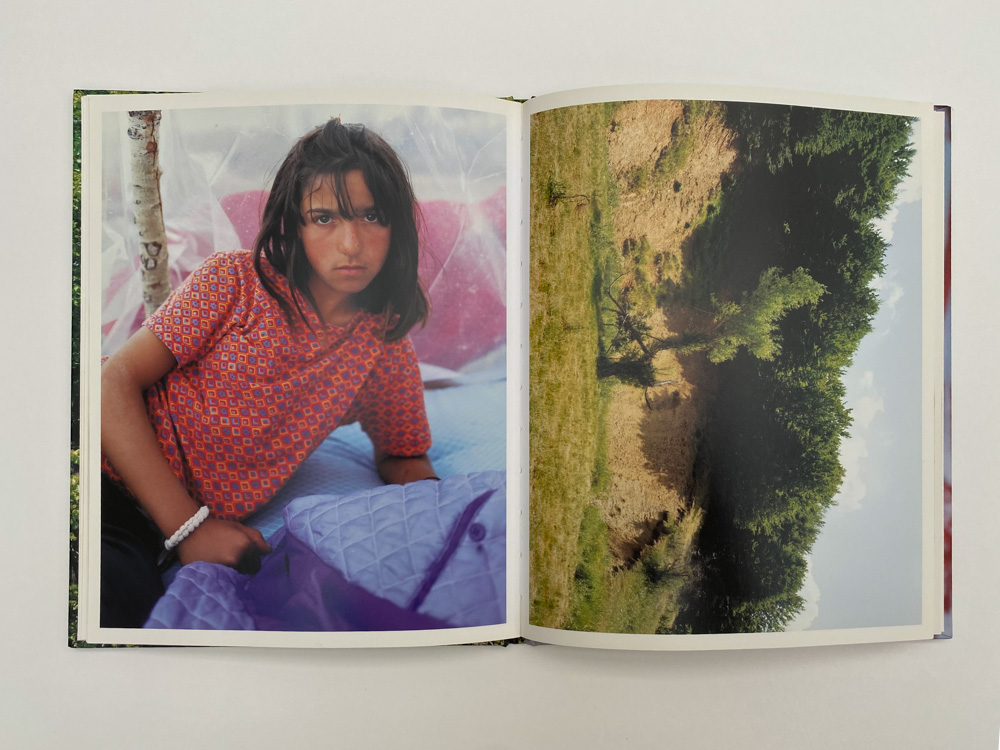
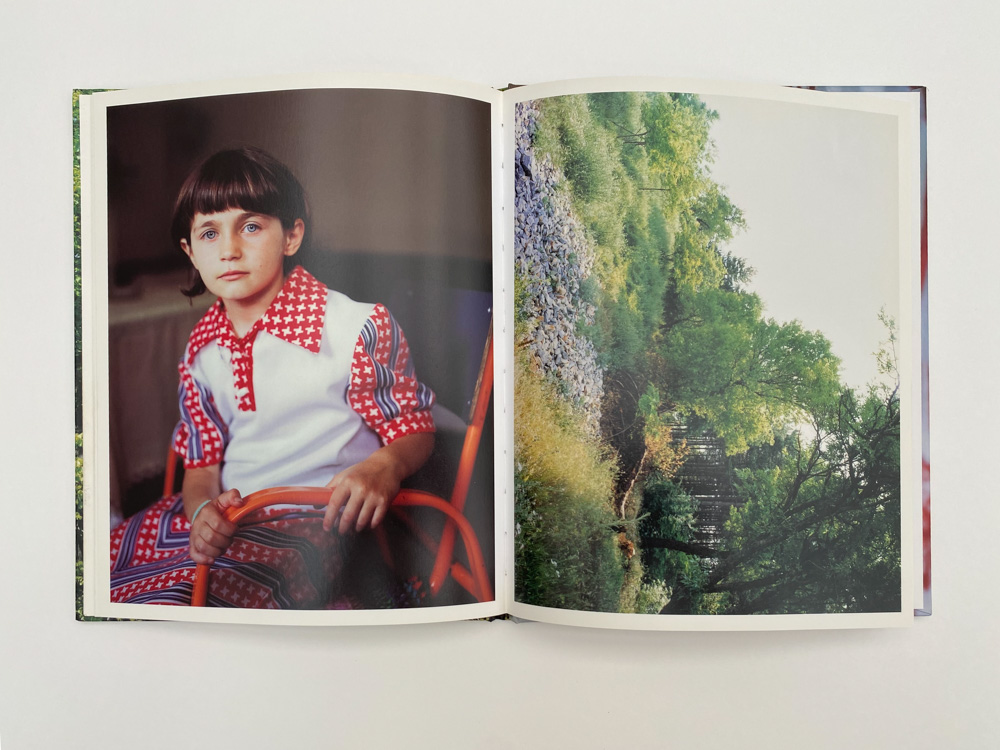
Photographer Cuny Janssen’s book Portraits/Landscapes, Macedonia (Schaden, 2004) is a moving, poetic representation of the conflicts that defined Macedonia after the collapse of Yugoslavia. I first learned of the photographer’s work from Gerry Badger and Martin Parr’s groundbreaking work on photography, The Photobook: A History Volume 2. Janssen’s book is featured in a chapter called “The Common Market: The European Photobook since the 1980s,” which is essentially about the remaking of Europe just before and after the fall of the Berlin Wall. It includes some of the most important photographers and books of the era, among them Waffenruhe by Micheal Schmidt, Stadt de Schwarz (City of Black) by John Gossage, and New Europe by Paul Graham, as well as obscure early titles by Josef Koudelka and Boris Mikhailov. The chapter does provide an interesting cross section of Europe at the time – central to the narrative are Germany in the time of The Wall and England under Margaret Thatcher – but it also includes books made in Norway, Italy, and the Netherlands. Janssen’s book is the only one that represents the Balkans, a region that shaped Europe throughout the 20th century but nevertheless remains in the shadows of the more powerful and affluent western countries.
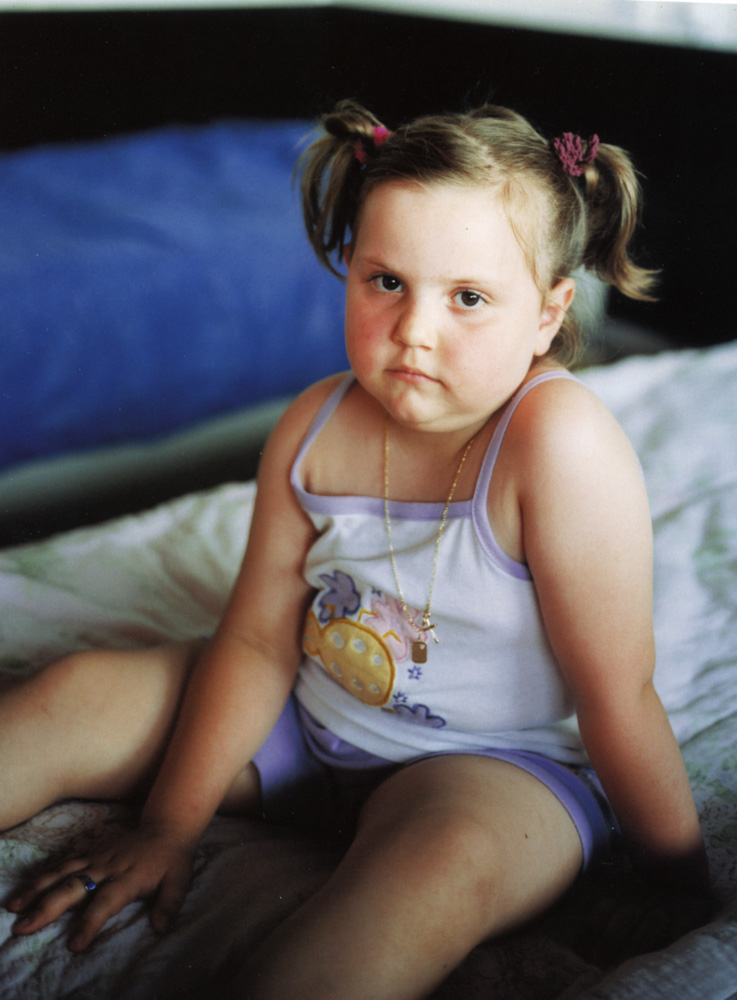
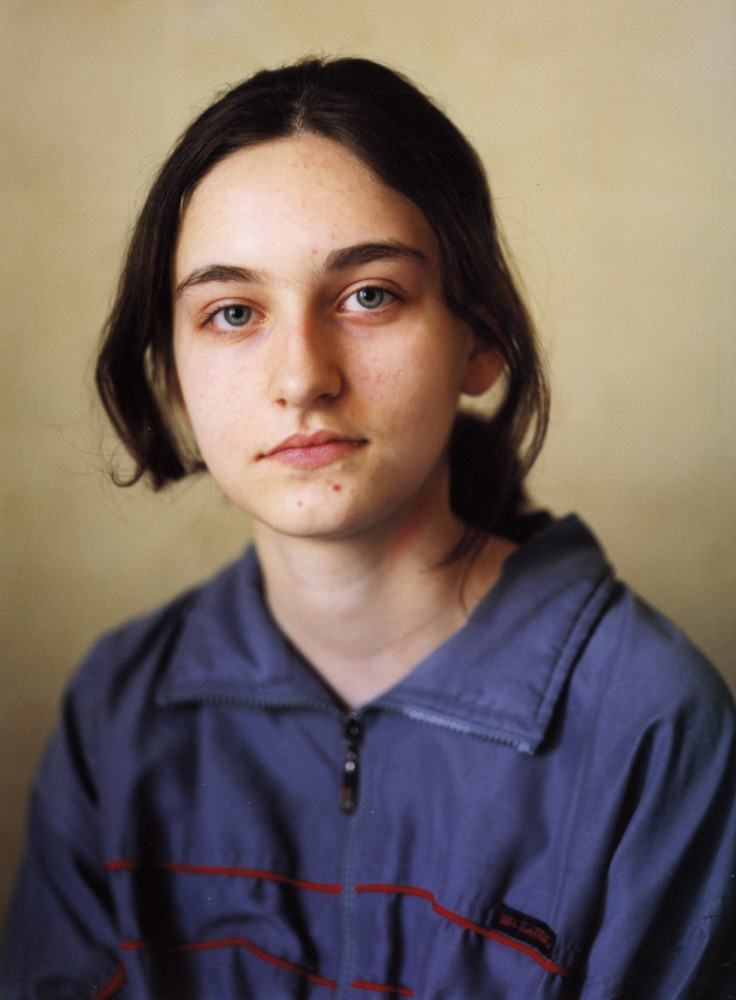
Janssen published Portraits/Landscapes, Macedonia in 2004 but started developing the idea in 2002. After winning second prize in the Prix de Rome – for photographs of children she made in the Netherlands (2000), India (2001), and Norway (2002) – her work was pushed in a new direction when one of the reviewers encouraged her to try and photograph children in war zones. He suggested that with the skills and vision she developed in these earlier projects she might discover something much more profound. She accepted the challenge and left to photograph in Macedonia in 2003.
All Janssen’s work focuses on children, and she brings an emotional intelligence to her pictures that I can only liken to Judith Joy Ross, Fazel Sheikh, and Dana Lixenburg – sophisticated, non-judgemental, empathetic, and patient.
Her interest in Macedonia resulted from a combination of historical study – specifically from the books Macedonië: Land in de Wachtkamer by Raymond Detrez and Macedonië: Mei 2000-December 2001 by Tanja Lubbers – and a deep emotional connection, found specifically in a recording called Macedonian Traditional Love Songs by Vanja Lazarova. To develop the project, she connected directly with author Tanja Lubbers – at the time working for Pax Christi, a Catholic peace organization active in Macedonia – who ultimately became her guide and primary contact. Janssen spent 3 months traveling the country, staying with local families, an essential experience for shaping the understanding and empathy she captured in her photographs. Janssen’s pictures represent the diverse ethnic communities that compose Macedonia – Bulgars, Slavs, Roma, Albanians, and Macedonians – and while photographing them, she started to understand all perspectives on the conflict and thus found it important to remain neutral, essential for the feeling of humanity at the core of the work. Indeed, the real beauty of her photographs lies within her remarkable ability to see and recognize the pain of conflict while still ignoring any ethnic divides, treating each of her subjects with respect, kindness, and love. In Portraits/Landscapes, Macedonia, we see dignity and empathy, a portrayal of our shared humanity and pain.
Today, I think of Janssen as a photographer and book-artist as interesting as she is prolific. All her work focuses on children, and she brings an emotional intelligence to her pictures that I can only liken to Judith Joy Ross, Fazel Sheikh, and Dana Lixenburg – sophisticated, non-judgemental, empathetic, and patient. Over a career spanning decades, she has completed projects in Macedonia, Italy, Iran, South Africa, Japan, Oklahoma, India, and each of these manifests as an entirely unique book object, innovative in their designs and moving in their photographic clarity. Portraits/Landscapes, Macedonia is her second book, and since developing this project, Janssen has used a similar strategy in each of her subsequent locales, photographing local children and juxtaposing these with landscapes from the region.
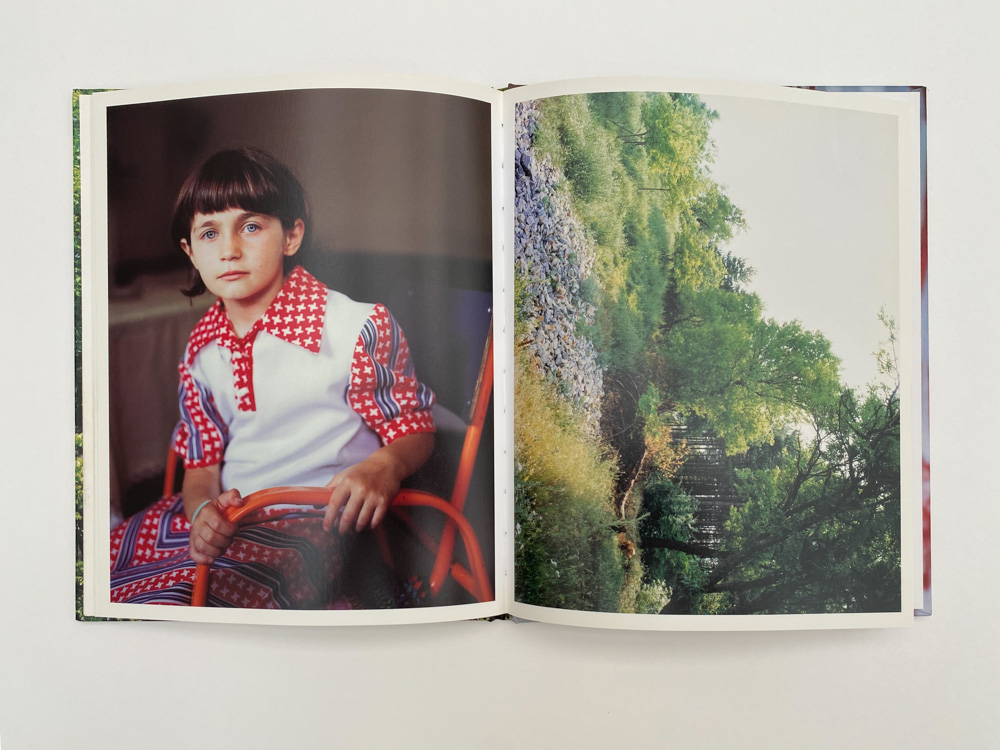
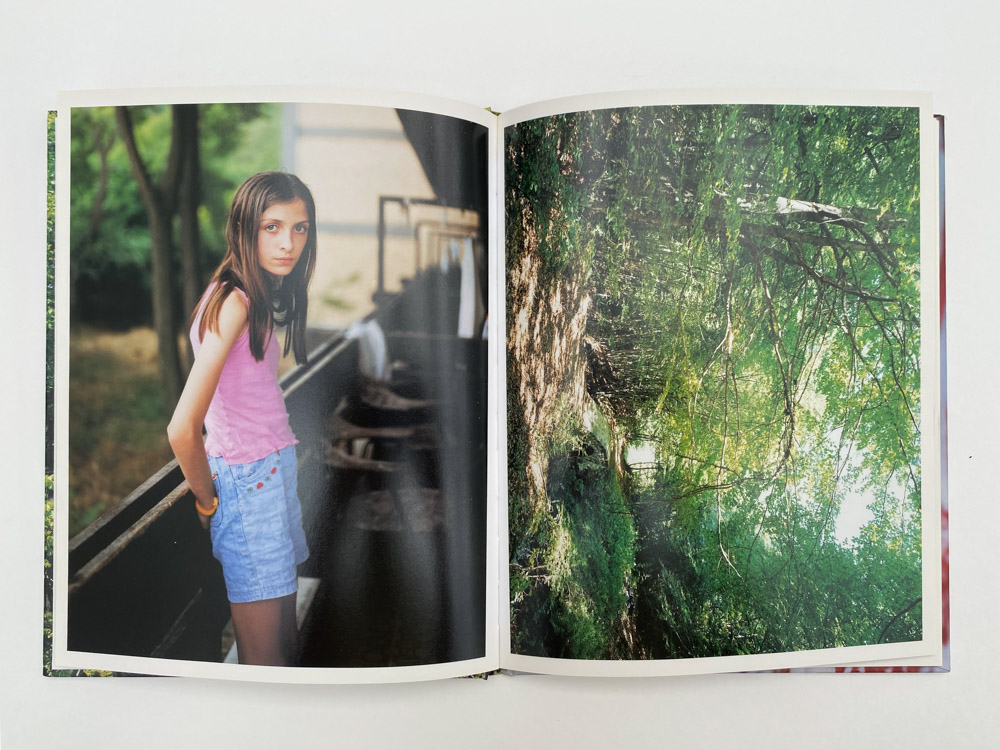
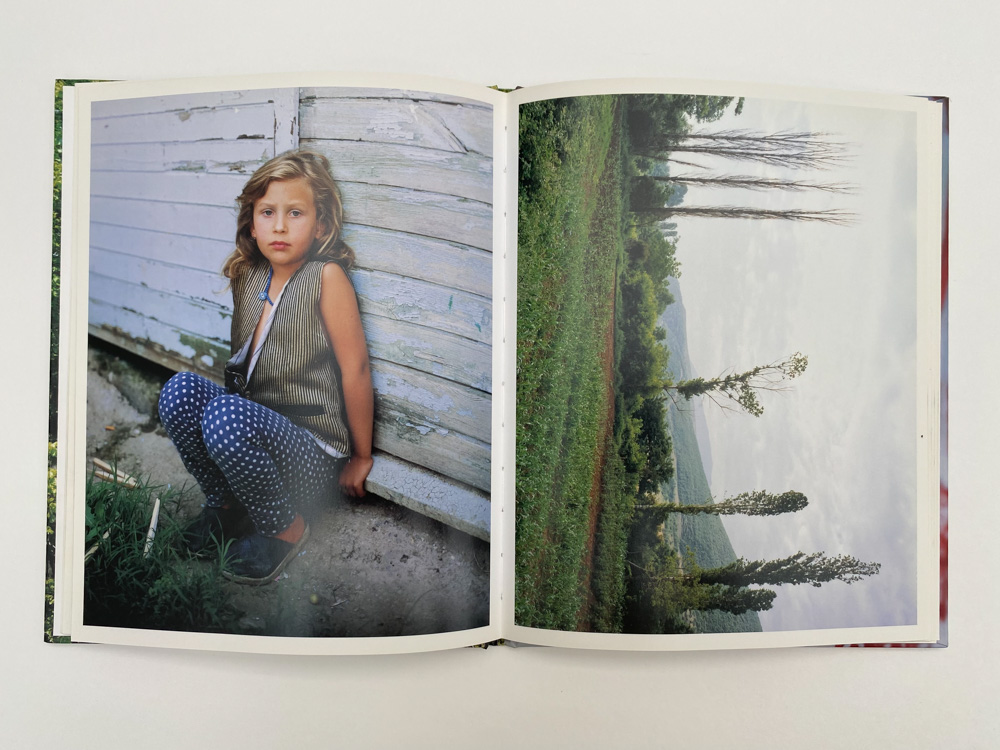
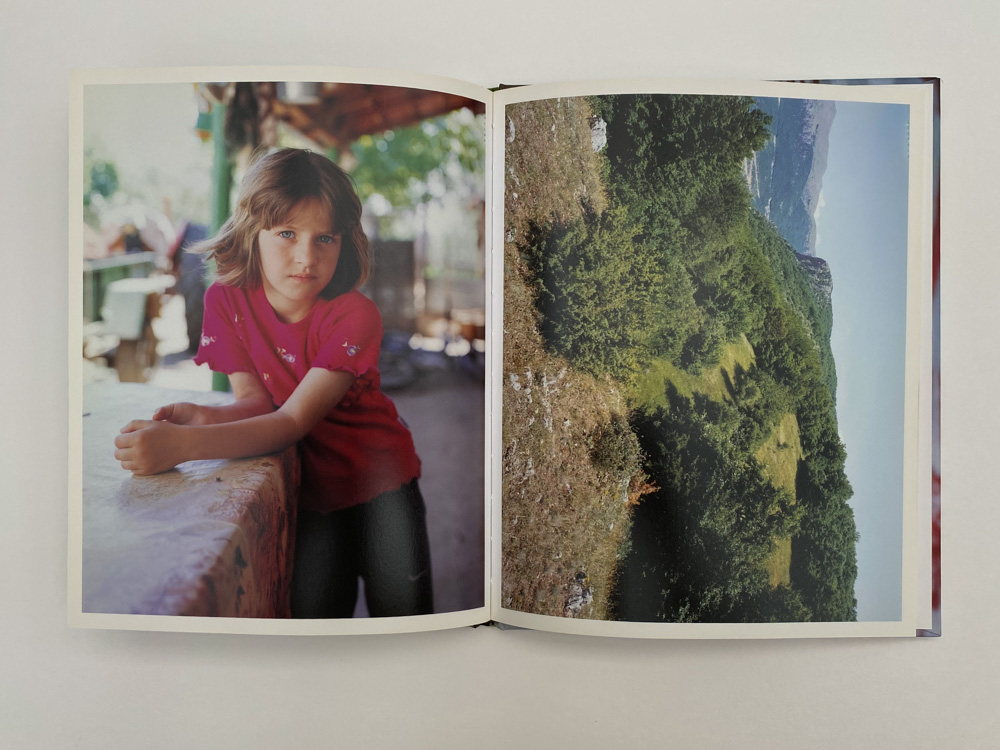
In many ways Portraits/Landscapes, Macedonia is her simplest book – her later books are all much more ambitious and experimental in form – but also perhaps her strongest. Designed by the highly regarded SYB, this book is a little clumsier than her later ones, but I also see this as part of its strength; a certain naivety adds incredible depth to the photographs, as if both the subjects and the photographer made themselves vulnerable for this work. The design of Macedonia is curious. The cover is almost plush, a soft, raised synthetic material that reminds me of books I read to my children when they were just a few years old. Portraits/Landscapes, Macedonia can be read from either cover – there is no front or back – one direction it appears as vertical portraits, the other as horizontal landscapes.
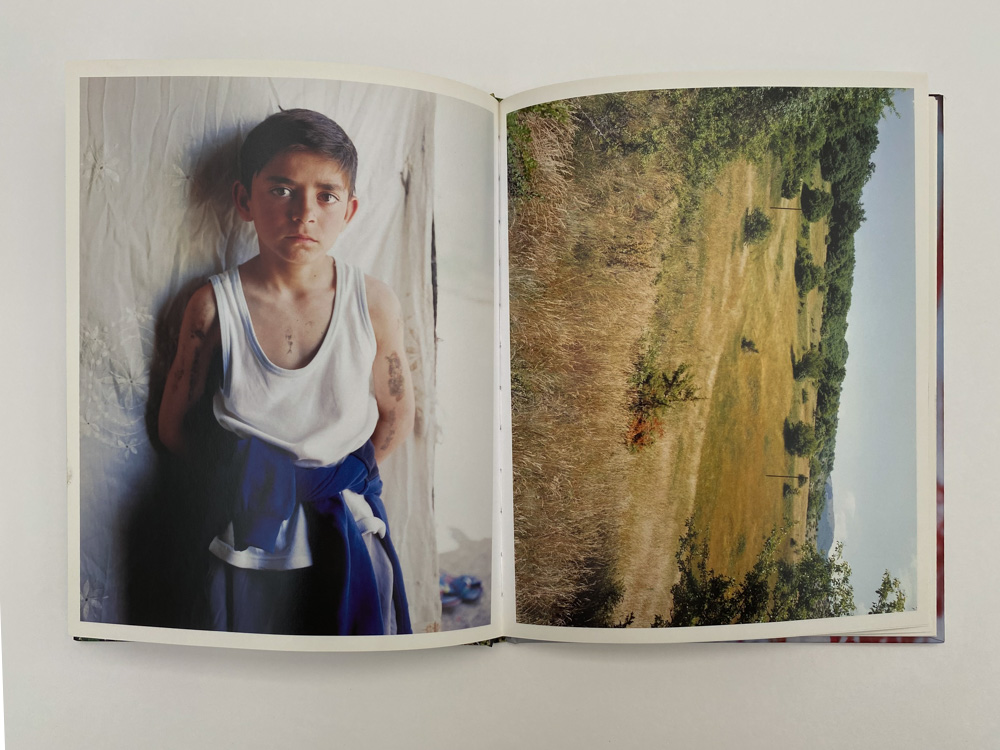
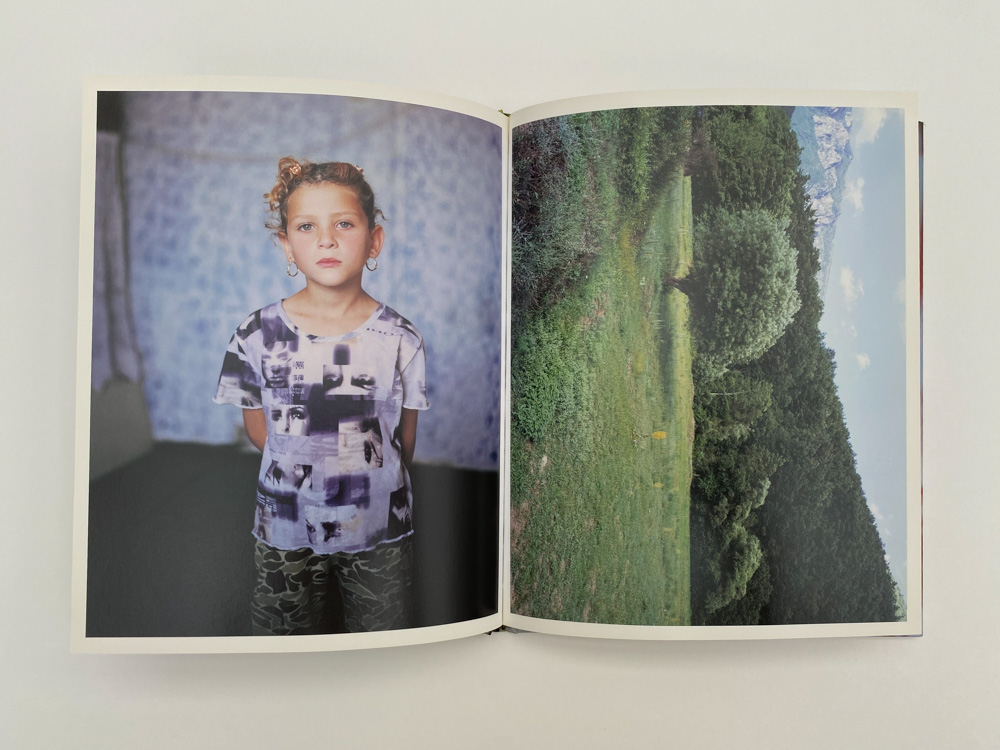
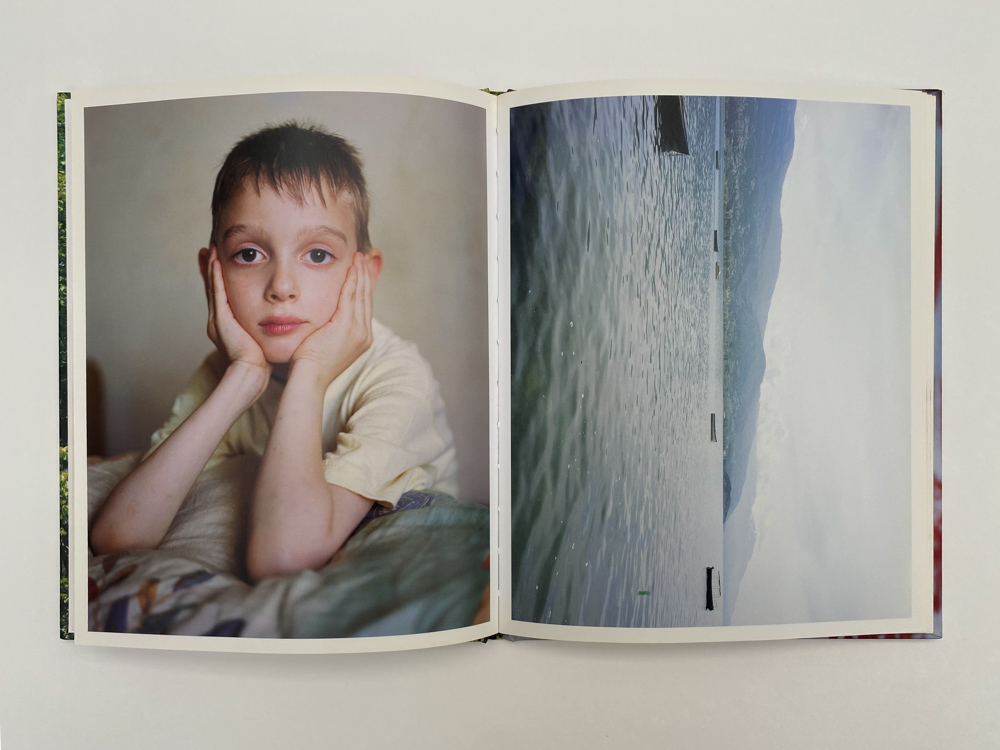
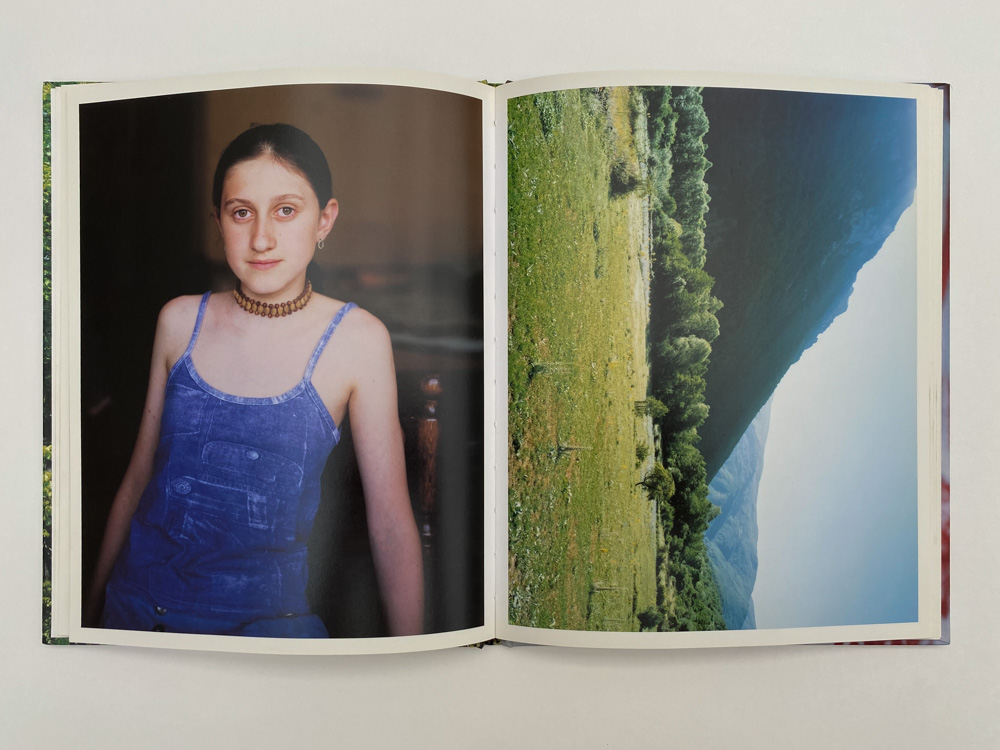
Paging through Portraits/Landscapes, Macedonia, there are two pictures per page spread – a portrait of a child juxtaposed with a sweeping view of the landscape. All the pictures use a rich but restrained color palette, clearly articulating the humility of the children and the natural riches defining the vistas. The pictures fill the pages, with just a thin white border around each of them. The children are all presented individually, lone figures in their environments, allowing simple attributes to define them. The combination of the portraits with the landscapes creates an understanding of a beautiful, stark region, home to rich and diverse cultures and loving families.
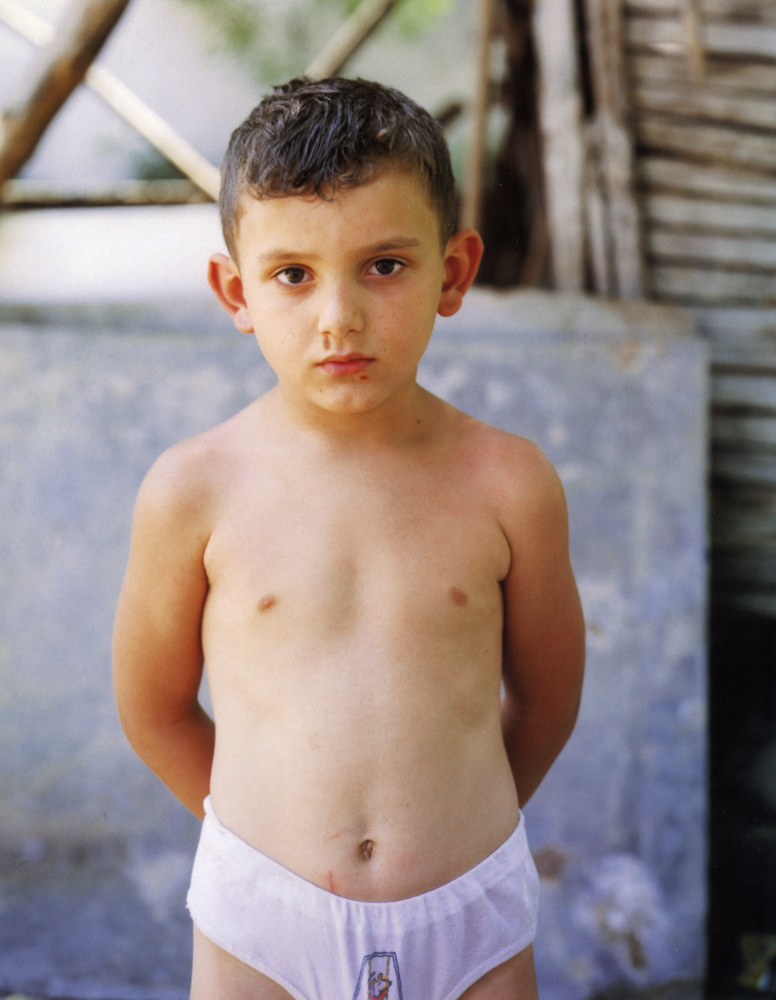
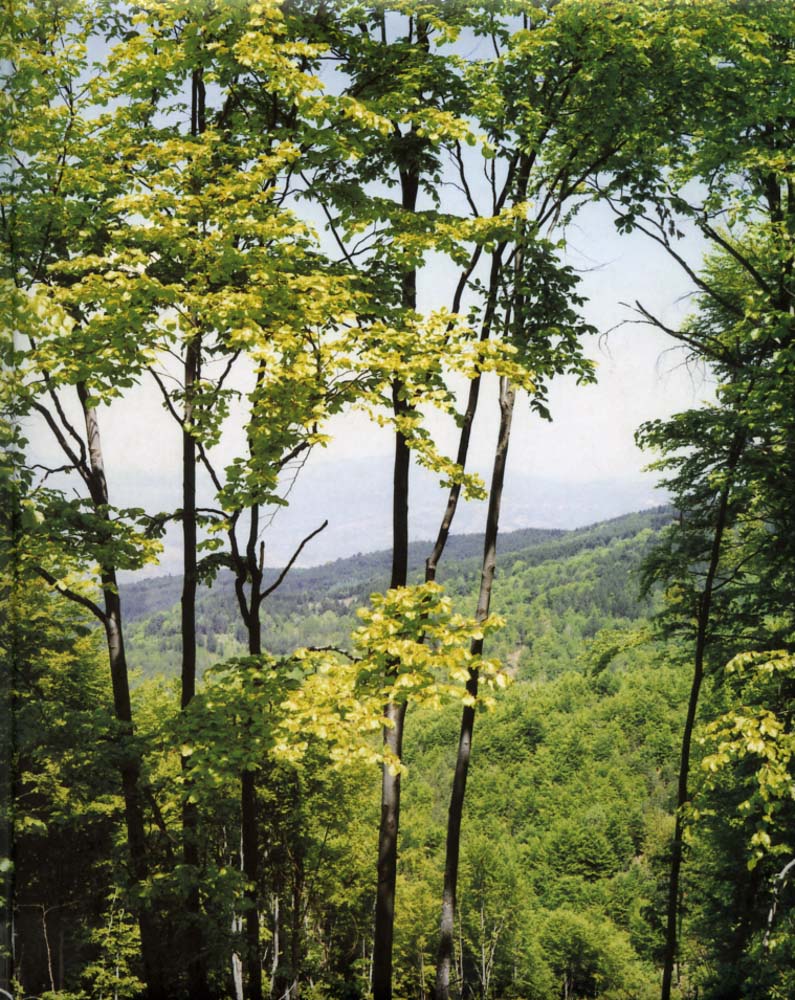
About halfway into the book, there is a change to the flow. On the left, there is a young boy in his underwear, flimsy and white with a cartoon mouse on the front. He appears to have recently suffered a bloody nose (a lovely metaphor for the conflicts instigating the pictures). His gaze is gentle but serious, unflinching in his connection with the camera, arms clasped respectfully behind his back. His serious candor shows wisdom beyond his years, still clearly a child but his innocence corrupted by histories he can’t possibly yet know himself. To his right is a view of rolling green hills. In the middle of the landscape a lone branch bends to the right, not quite broken but still strained and imperiled; like the boy, bent by the forces of its life.
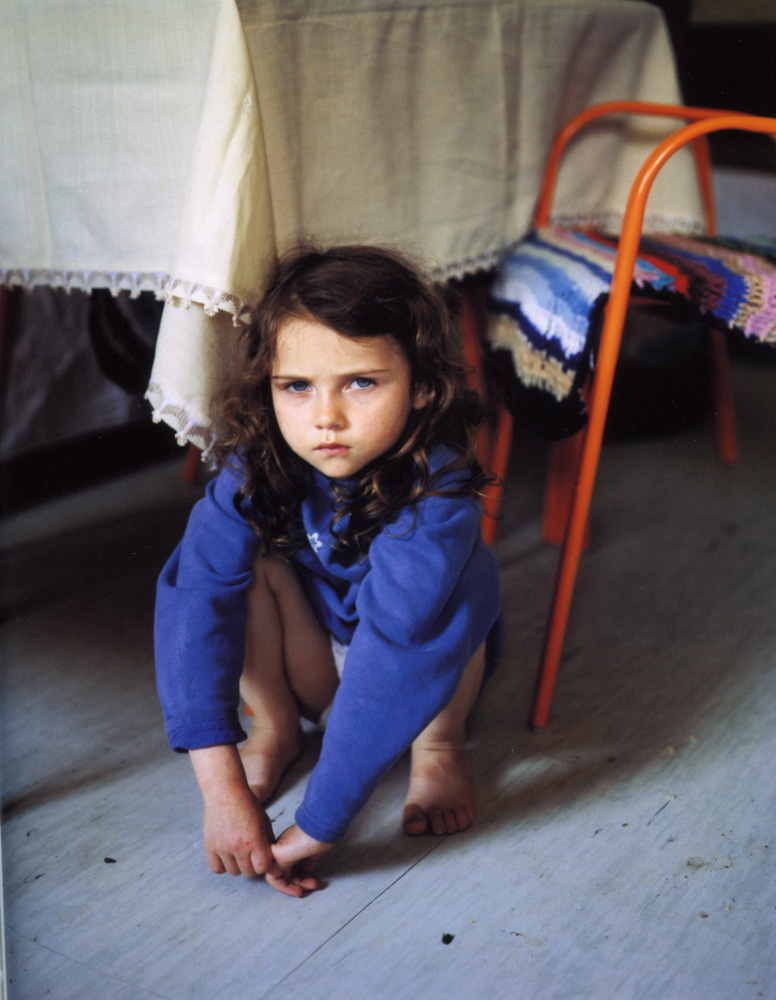
These two pages open, the only gatefold in the book, revealing more pictures beneath the landscape. As we open these pages, the boy is now pictured next to two more portraits, both girls, one older and the other a similar age. The younger girl is sitting on the floor, down on her haunches, looking angry and skeptical as she gazes into the lens. The older girl is a teenager, a few pimples scattered across her face, but she seems to offer the photographer much more trust. These pages continue to open, and beneath the girls is another spread; to the left is a short essay by art historian Paul Andriesse offering a short explanation of Janssen’s photographs, the right is printed with fourteen small photographs. These pictures show us families for the first time, the children all with their siblings or parents. At first glance the pictures seem incidental and without much substance, but a closer reading shows they are the heart of the book, quietly accentuating the depth of the lives recorded throughout the rest of its pages.
Ultimately these children show us redemption, demonstrating that a common understanding of humanity is possible because of our shared love of children.
In thinking back to “The Common Market: The European Photobook since the 1980s,” the chapter from the Parr/Badger history, the authors missed something important in not acknowledging more about the Balkans, and I think even miss the mark in their interpretation of Janssen’s book. The Balkans really defined Europe in the 20th century. World War I started in Sarajevo and the Yugoslav Partisans were on the front lines in the battle against Fascism during World War II. The Balkans are also where the Ottoman Empire, Communism, and Western Europe all meet, and within these crossroads we see all the conflicts that shaped Europe in the modern era. Janssen’s book Portraits/Landscapes, Macedonia is a brilliant representation of the region and its ethnic tensions, a small sliver of a complex stew of cultures and regional identities. Badger and Parr provide a perfectly succinct reading of Janssen’s pictures and the dilemmas facing North Macedonia today: “These children, united in seriousness, may – probably will – grow up hating those from a different ethnic background, tainted by the prejudices of their parents. The landscapes of rock and field and forest, so lyrical and peaceful today, could be fought over once more tomorrow.” This is indeed the case, but I also think this misses the real intent of Janssen’s work. Ultimately these children show us redemption, demonstrating that a common understanding of humanity is possible because of our shared love of children.
***
The first time I met Cuny Janssen was in December 2024. From the beginning of our conversation, she emphasized her love of children, even suggesting she felt like one of them deep into her adult life, clinging to the ideal of unconditional love we all find in children. Her portraits are so mesmerizing precisely because of this love and empathy, something the photographer can clearly see in all children. This is a lovely ideal, making Portraits/Landscapes, Macedonia so moving, demonstrating that pure innocence is real – or as Janssen prefers, onbevangen, which translates as unjudged or unbiased – even in the face of so much pain.
I watched Before the Rain as part of my research for writing about Janssen’s book. Made in 1994, it was the first feature film made in newly independent Macedonia, so I thought it might offer important insights into the nation after Yugoslavia. The movie opens with Kiril, the silent monk, walking the banks of Lake Ohrid, from the famous monastery offering a view from Macedonia into Albania. Kiril looks to be only 16 or 17 years old, just a boy, and he walks with an older monk – a boisterous and wise man with a portly belly and a greying beard. When Kiril returns to his bunk, he finds Zamira. He feels her anxiety, and quietly consents to help her. Like Kiril, Zamira is still just a teen, maybe 14 or 15, and desperate for life because of the accusations from her neighbors.
When Aleksander returns home, we learn about his childhood love, an unrequited passion for a Muslim girl in the neighboring village. Back home, suffering the trauma of war and the emotional complexities of loving a married woman, Aleksander begins to understand the love of his childhood, innocent and unconditional. This all leads me to believe in some fundamental connections between Before the Rain and Portraits/Landscapes, Macedonia, both ultimately stories about innocence, emptiness, and the tortured histories that shape our lives.
Cuny Janssen
Schaden 2004