Feiyi Wen: The Garden and The Gaze
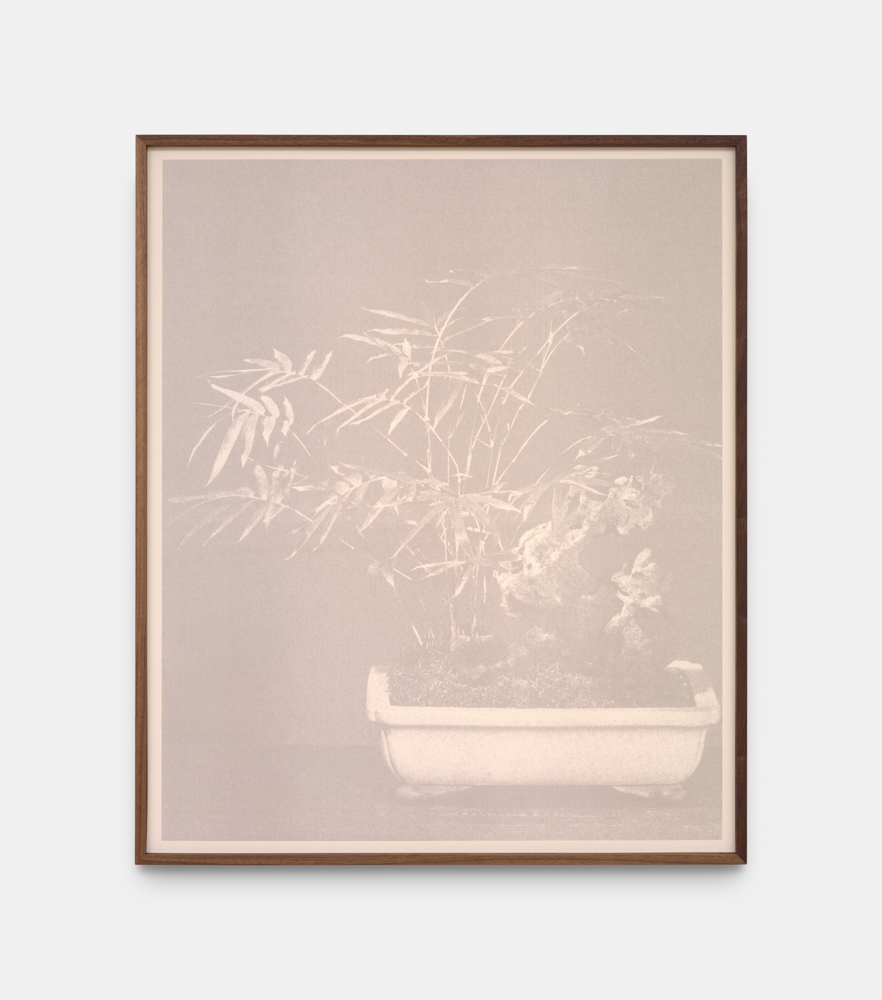
A pair of rose hips, a solitary bonsai, the faint silhouette of a butterfly’s wings and the floral tassels of an amaranth. There is an indisputable organic thread in Chinese artist Feiyi Wen’s subject matter, yet her subjects sit in partial recognition only, seemingly suspended in time. Such is the indistinct botanical backdrop presented in The Garden and The Gaze, an Albion Jeune exhibition which brings together two artists grounded in East Asian aesthetics.
Within the natural scenes on display in The Garden and The Gaze, nature exists on its own terms, removed from Western realism. Obscurity functions as both a raison d’être and an aesthetic value. Ultimately, what emerges is no longer the descriptive clarity traditionally associated with photography but something more aligned with painterly strategies used to convey Eastern modes of perception.
There is an indisputable organic thread in Chinese artist Feiyi Wen’s subject matter, yet her subjects sit in partial recognition only, seemingly suspended in time.
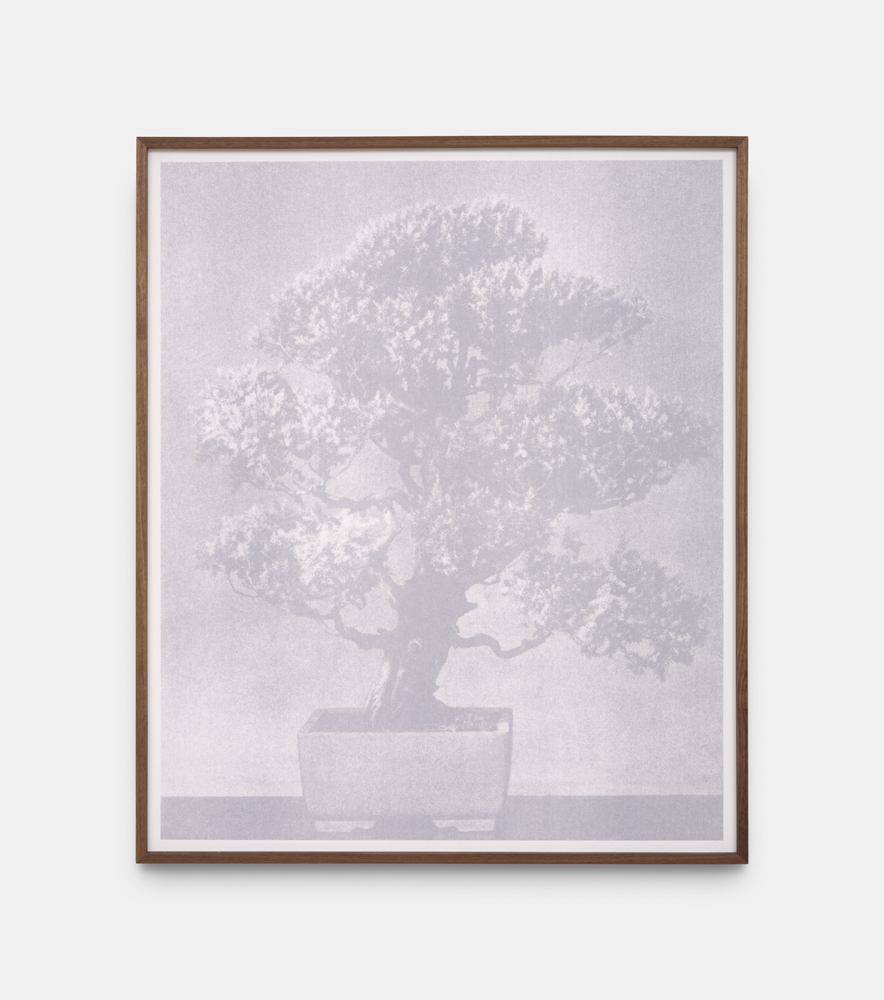
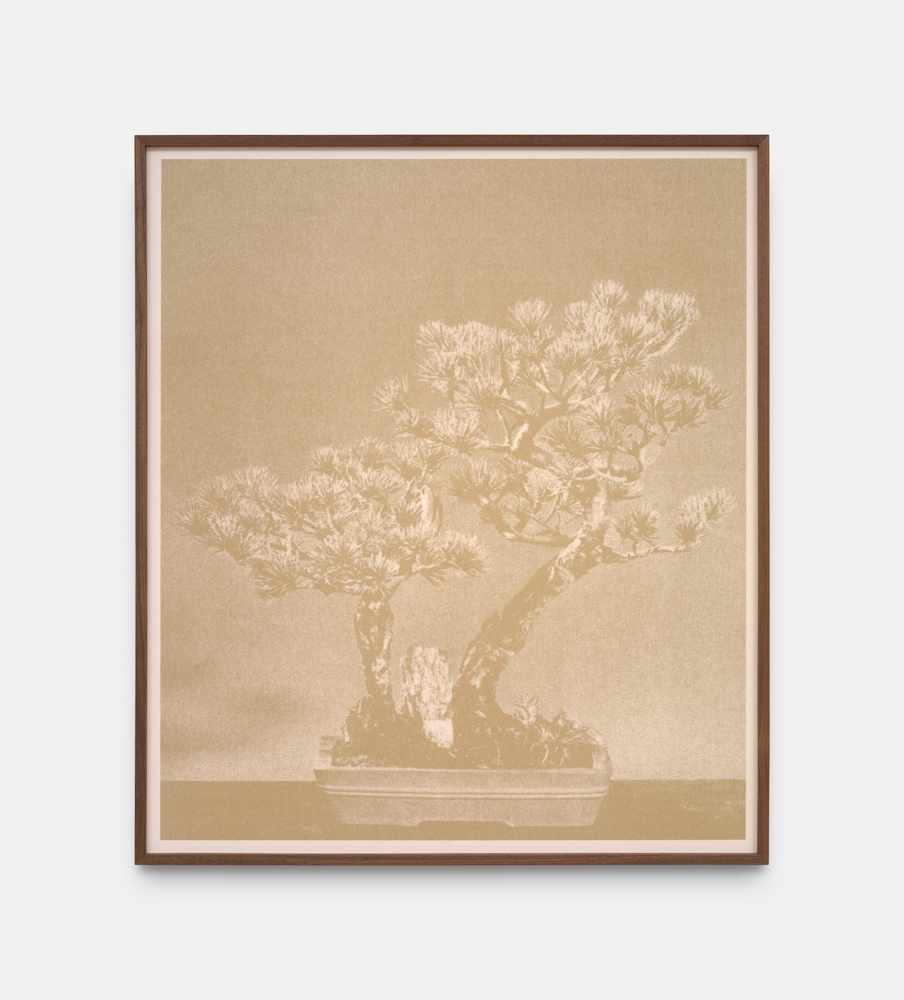
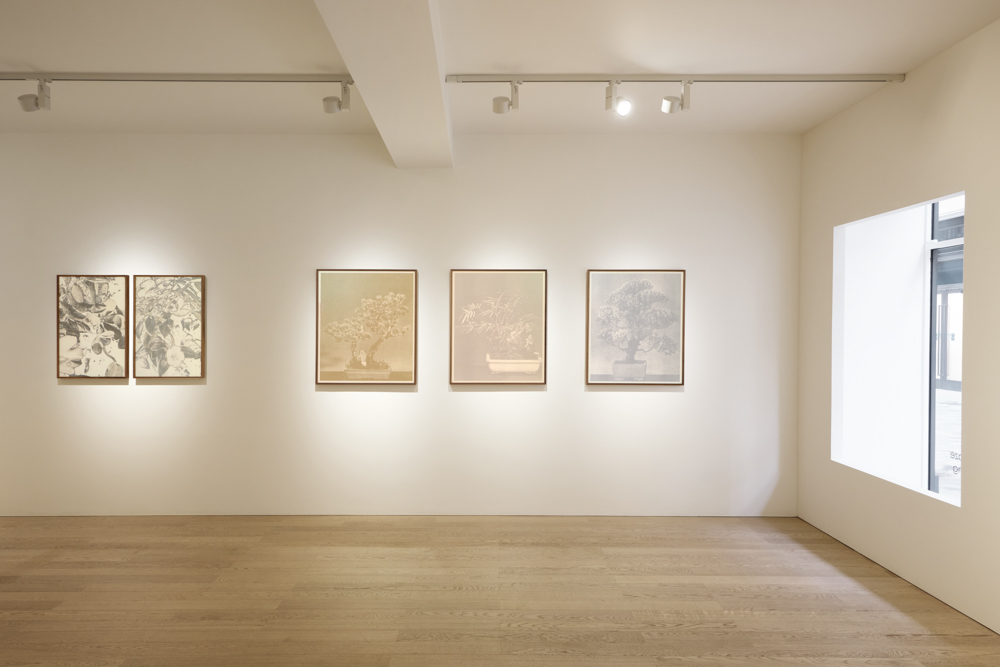
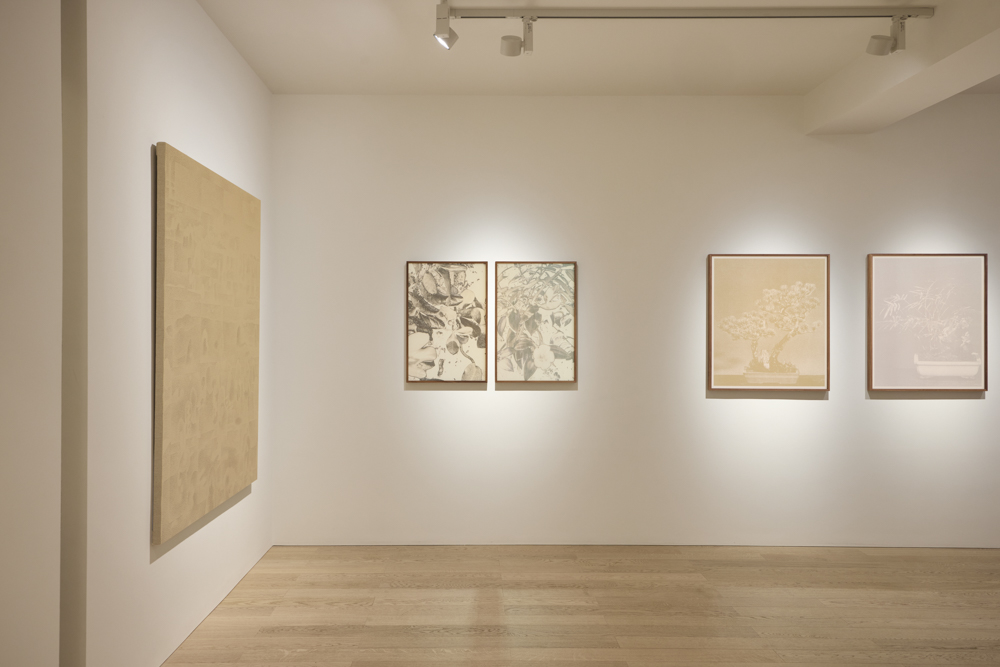
Presenting 10 portrait-oriented, untitled prints of similar dimensions on rice paper, Wen initially draws on early horticultural imagery reminiscent of the era bonsai first entered Western consciousness. In the same way photorealist painter Franz Gertsch experimented with seriality in a limited range of colours, Wen explores the bonsai motif through subtle changes in tone in a series of three striking monochromatic bonsai.
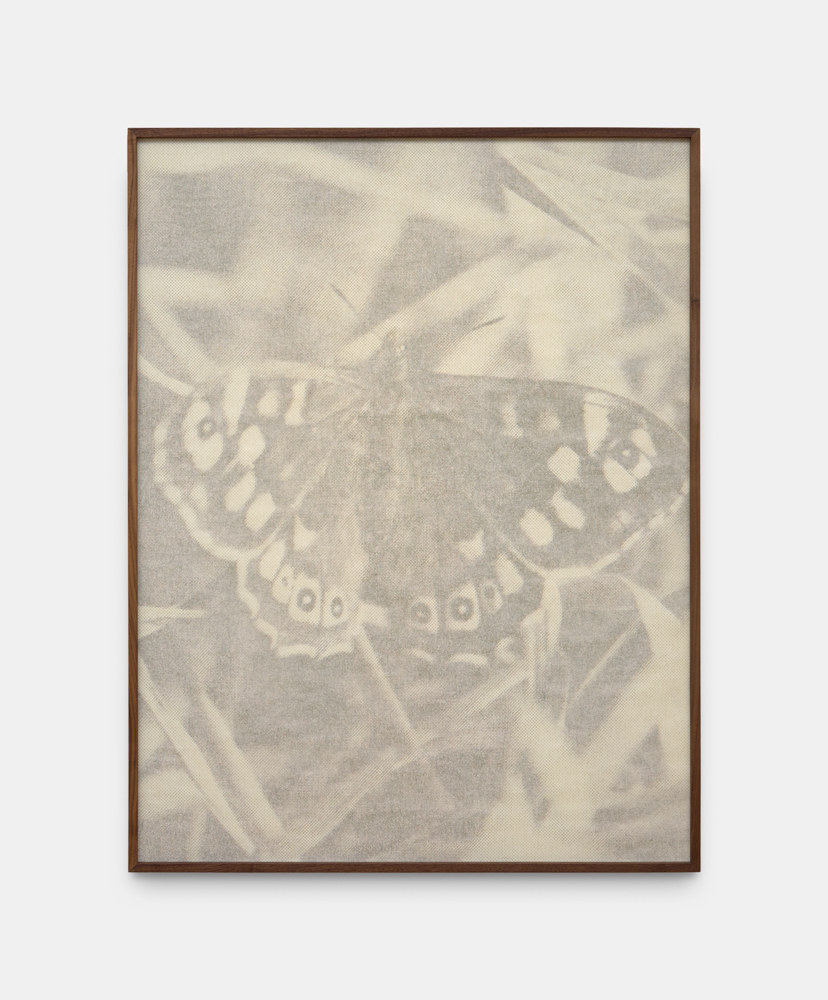
Across the room, the soft and delicate patterning of a butterfly’s wings is barely distinguishable. Analogous to the bonsai, the insect is suspended between appearance and disappearance, as if it might vanish altogether, reinforcing Wen’s investigation into the ephemeral and provoking questions on reality and the way we experience nature.
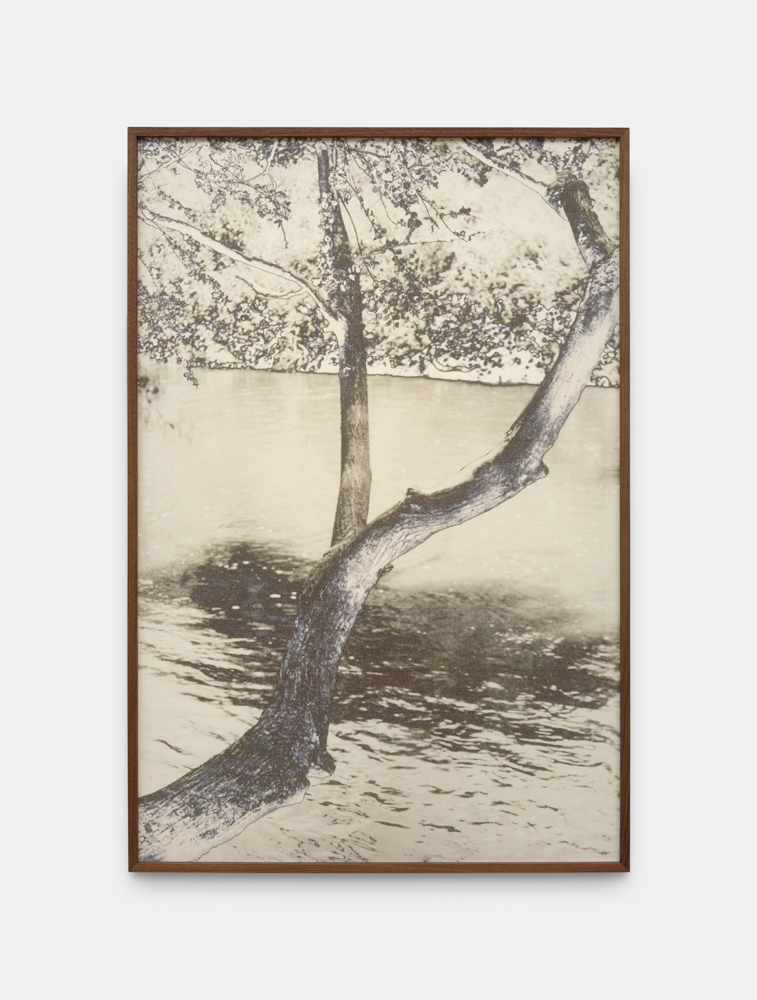
Adjacent, a view of a tree branch hanging over gently moving water brings to mind the solarised prints of Lee Miller or Man Ray. With its surrealist sensibility, the scene becomes a reversal of negative and positive as highlights become dark and shadows light. No longer are we seeing the precise documentation expected of a traditional photograph, with the contours of the tree not unlike the lines Man Ray used to augment his portraits.
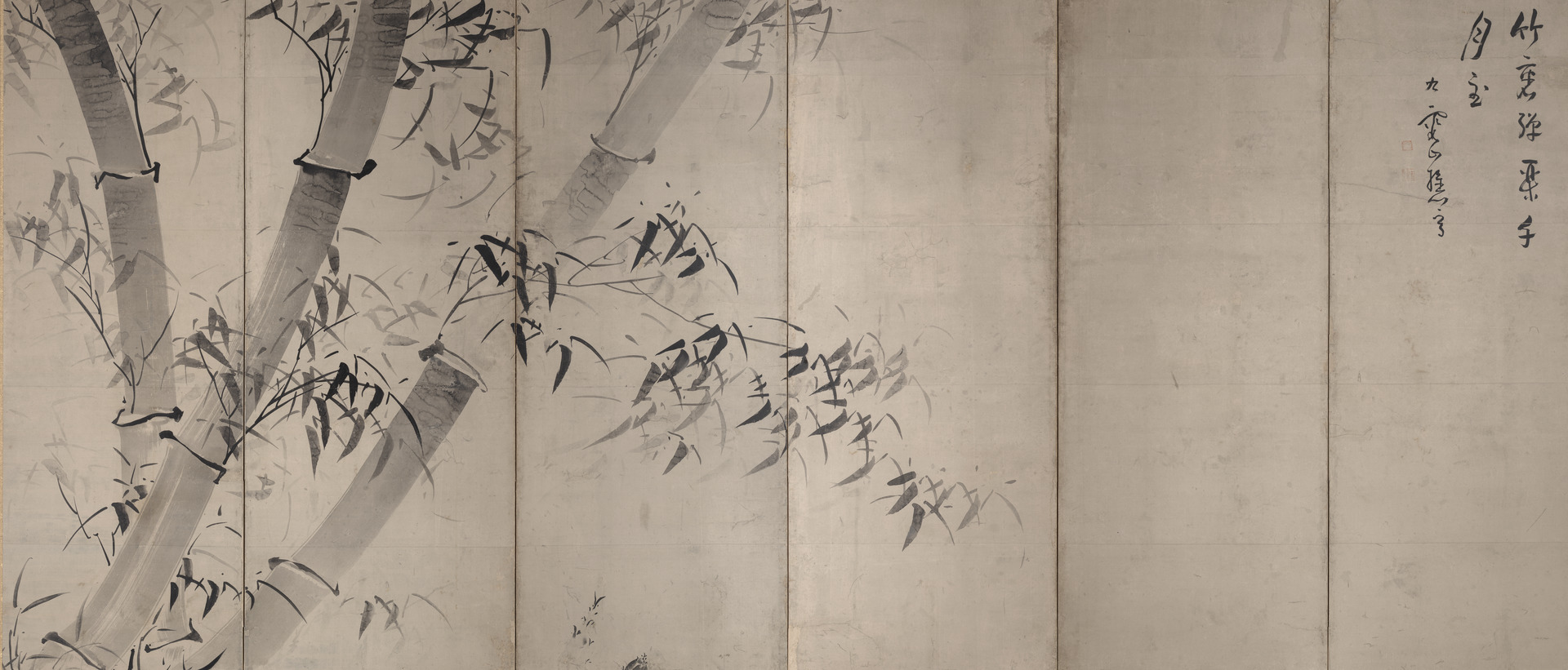
Ike Taiga, the Japanese ink painter whose six-panel Moonlight Bamboo effortlessly conjures a nocturnal atmosphere without a visible moon, challenged established traditions to convey meaning beyond literal depiction. Similarly, Wen’s image of the tree branch suggests an evocatively moonlit night. A lustrous, metallic sheen permeates the landscape despite a lunar absence, while the expanse of water functions as negative space, inviting meditation.
As we move deeper into the sequence of botanic prints, forms become increasingly ethereal and softly blurred, approaching pure form rather than any identifiable structure. Berries, leaves and stems in warm golden tones through to metallic, iridescent silvers appear in elusive surroundings withheld from full disclosure. The remaining organic cues feel unreliable. What persists, however, is the suggestion of natural presence rather than any realistic depiction.
Wen’s practice, in its most simple form, can be understood as a rethinking of traditional Eastern values. Grounded in Taoist dualism, her imagery reflects a view of nature as an interconnected, organic whole.
Wen’s practice, in its most simple form, can be understood as a rethinking of traditional Eastern values. Grounded in Taoist dualism, her imagery reflects a view of nature as an interconnected, organic whole. From this foundation, she employs contemporary photographic techniques such as repeated scanning and reprinting in a process of dematerialisation through which her work asserts a quiet independence.
In embracing the evocative power of suggestion, the artist opens space for the viewer’s own perception to unfold. The meaning – obscure rather than manifest – remains just out of reach. This is not a like-for-like reproduction of nature but instead Wen’s own description of truth. In this sense, Wen comes into her own as she moves from description to something less comprehensible and less recognisable as having any Eastern influence at all.
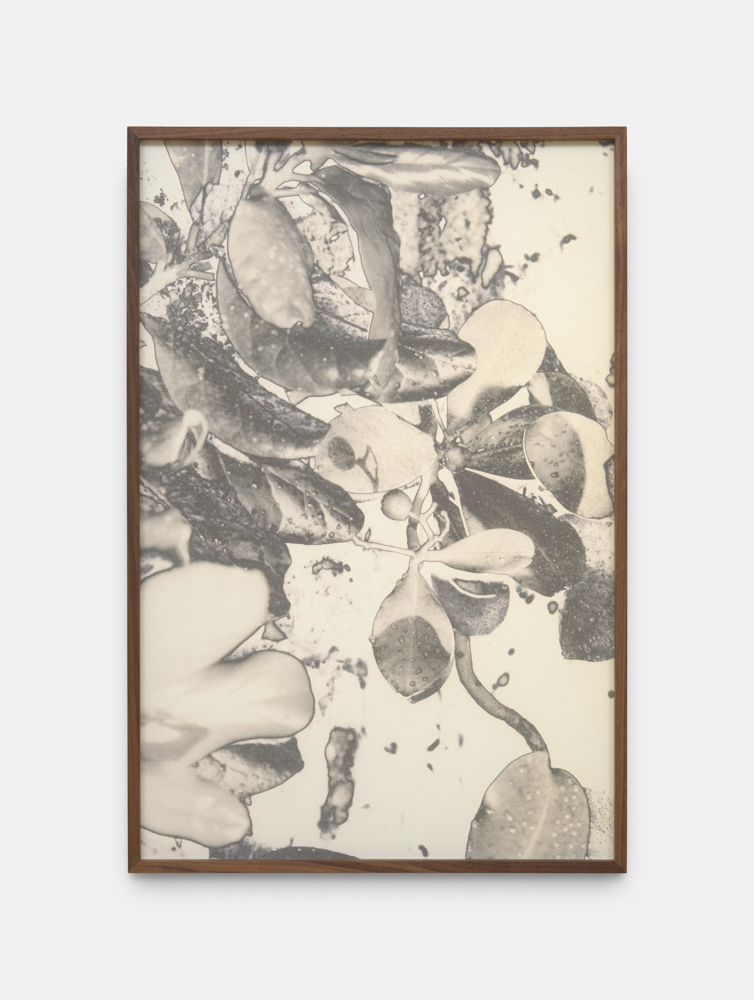
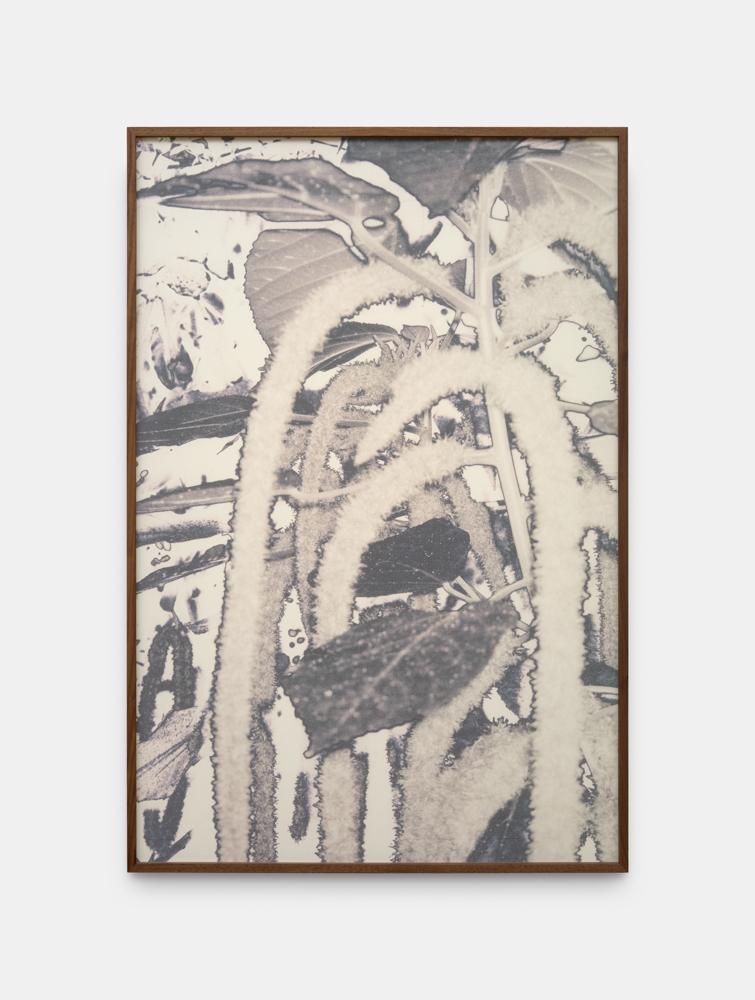
Across the works, light behaves unnaturally. The images recall photograms, where the mise en scène is not confined to the instant of exposure. Wen manipulates the photographic surface through alternative darkroom and printing processes in a manner comparable to a bonsai cultivator pruning their bonsai to enhance its intrinsic beauty. In their poetic idealisation, both parties work towards a common philosophical goal of truth, artistic vision and a deeper connection with nature as they experiment to achieve a particular aesthetic appearance.
The tension between Eastern modes of perception and Western notions of reality lies at the core of Wen’s work.
This emphasis on process rather than accuracy highlights a fundamental distinction between painterly and photographic flou. Established in photography by the late 19th century as a technical descriptor, flou was frequently understood as a failure of precision rather than an aesthetic choice, in contrast to painting, where effects of softness and visual ambiguity were historically deployed as constructive devices to enhance illusion, atmosphere and meaning over accuracy. In early 20th century Paris, particularly during the brief convergence of Dada and Surrealism around figures such as Man Ray, André Breton and Tristan Tzara, the term acquired a broader critical resonance and was sometimes used unfavourably to describe images that rejected sharp focus and clarity in favour of imprecision, disorientation and dream-like perception.
In The Garden and The Gaze, Wen reclaims a painterly notion of flou, using it not as a detraction from truth but as a means of arriving at her own faithful representation. In inadvertently challenging the notion that precision equates to truthfulness, she aligns herself with the approach of traditional East Asian artists who, rather than replicating the visible world exactly, sought to capture the underlying essence of nature through a distinct visual idiom. This tension between Eastern modes of perception and Western notions of reality lies at the core of Wen’s work.
We sense the artist is working towards her own independent aesthetic criteria in search of an absolute truth. Wen uses Eastern cultural influences to guide, but not constrict, her aesthetic perceptions. They are merely prompts for developing her own notion of reality, which is at times perceptibly closer to Eastern concepts than Western ones.
Wen’s work proposes a new framework for seeing nature itself, encouraging a deeper intellectual engagement with the natural world. In doing so, her images expand our aesthetic understanding and refine the ways in which we experience our environment. Perception is fluid, meaning is latent and the image becomes a catalyst for contemplation. It is, after all, the natural world which acts as the impetus for our most fertile imaginative experiences.
Feiyi Wen’s work is exhibited in The Garden and The Gaze at Albion Jeune from 3 December 2025 to 31 January 2026.
All Rights Reserved: Text © Sarah Jitjindar
Images © the artist and Albion Jeune unless otherwise noted.
Photography by Tom Carter.