Nat Faulkner – Strong Water
Nat Faulkner’s work is often described as ‘alchemical’ – a term that feels apt, given his fascination with darkroom processes. But writers often reach for descriptions like this to ascribe a kind of quasi-mystical obscurity to analogue photography. In fact, Faulkner rarely describes himself this way, and his characterisation of his practice as ‘collaborative’ – driven by processes he sets in motion but doesn’t fully control – sits awkwardly with the alchemist’s ambition to master the elements. For Faulkner, photography isn’t a metallurgical riddle to be solved, it’s part of the substance of the world.
In her remarkable 2015 book, The Miracle of Analogy, art historian and theorist Kaja Silverman describes photography as an ‘ontological calling card’ – it doesn’t just show us what the world looks like, in other words, it reveals something about the nature of being. Photography, she writes, is grounded in analogy: the trace left by light on the negative is structurally continuous with what it depicts. This resemblance is more than just visual or indexical, and it extends far beyond the photographic image. Rather, it is evidence of the vast network of affinities that makes up the world.
Silverman’s ideas open up a more expansive reading of Faulkner’s practice. In Strong Water, his recent exhibition at the Camden Art Center, windows, mirrors, photographic substance and even light itself operate across several registers: as metaphors and materials to be shaped but also, significantly, as analogical forms. Alongside photography’s history and its material conditions, Faulkner’s work attends to the way that the medium itself is ‘profoundly interlocked with the deep things of Nature’, as Lady Eastlake, an early critic of photography, wrote in 1857.
Alongside photography’s history and its material conditions, Faulkner’s work attends to the way that the medium itself is ‘profoundly interlocked with the deep things of Nature’, as Lady Eastlake, an early critic of photography, wrote in 1857.
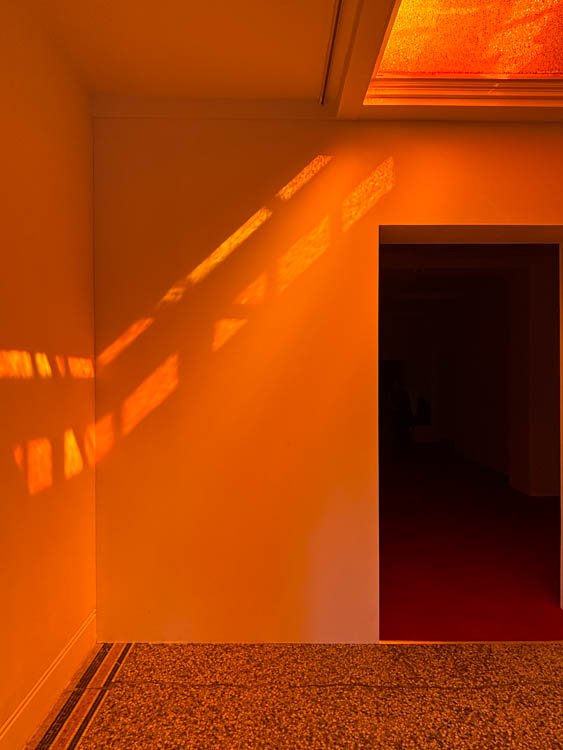
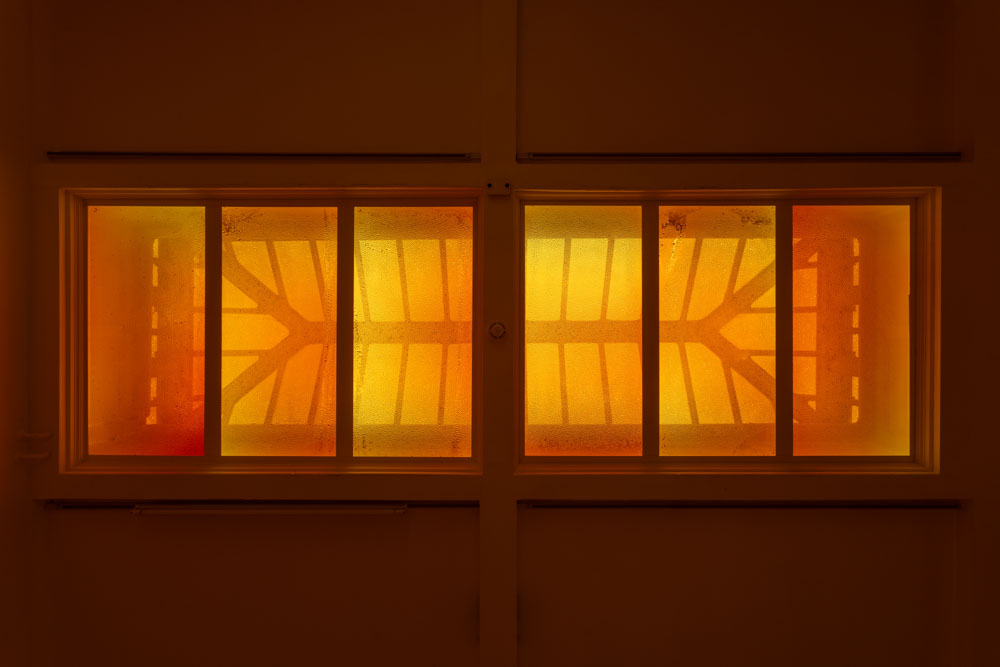
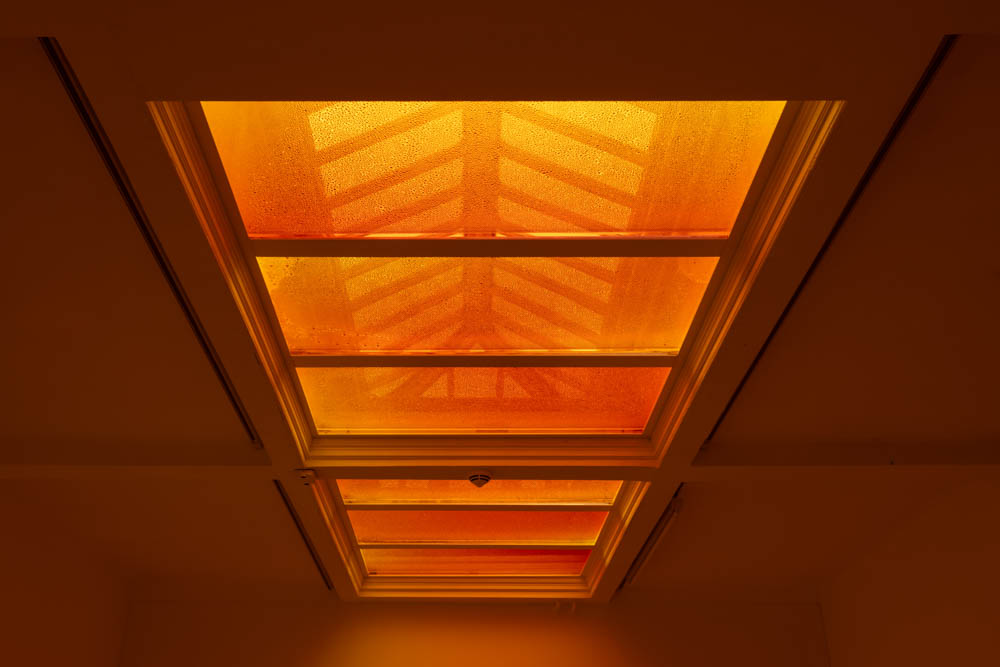
Multiple layers of reference are embedded and repeated across all of the works in the exhibition; process, matter and subject continually fold back into one another. In the small annex outside the main room, the skylight has been fitted with vessels containing iodine solution – an early photographic developer. The space is bathed in a tangerine glow that recalls both the darkroom and the crepuscular light of sunset: light, chemistry and perception dissolve into a single immersive experience.
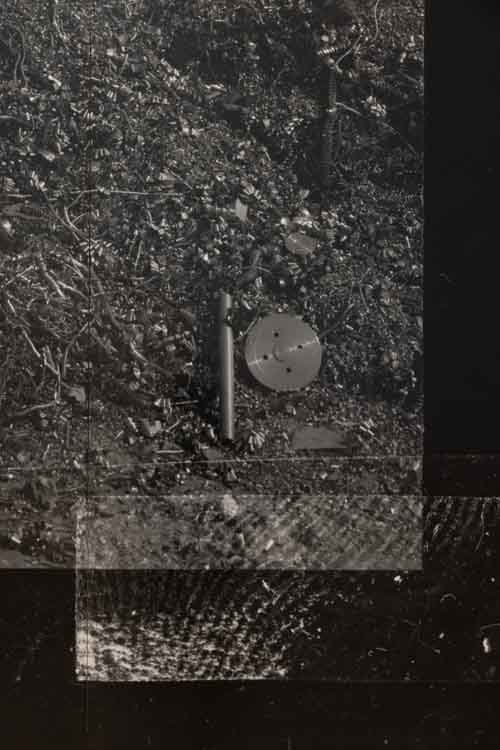
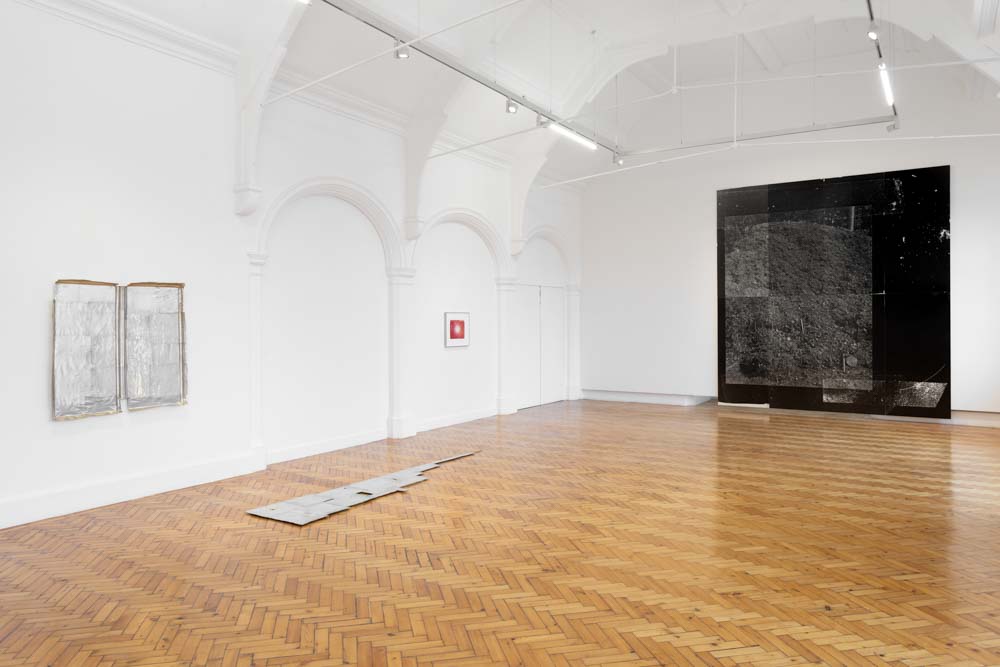
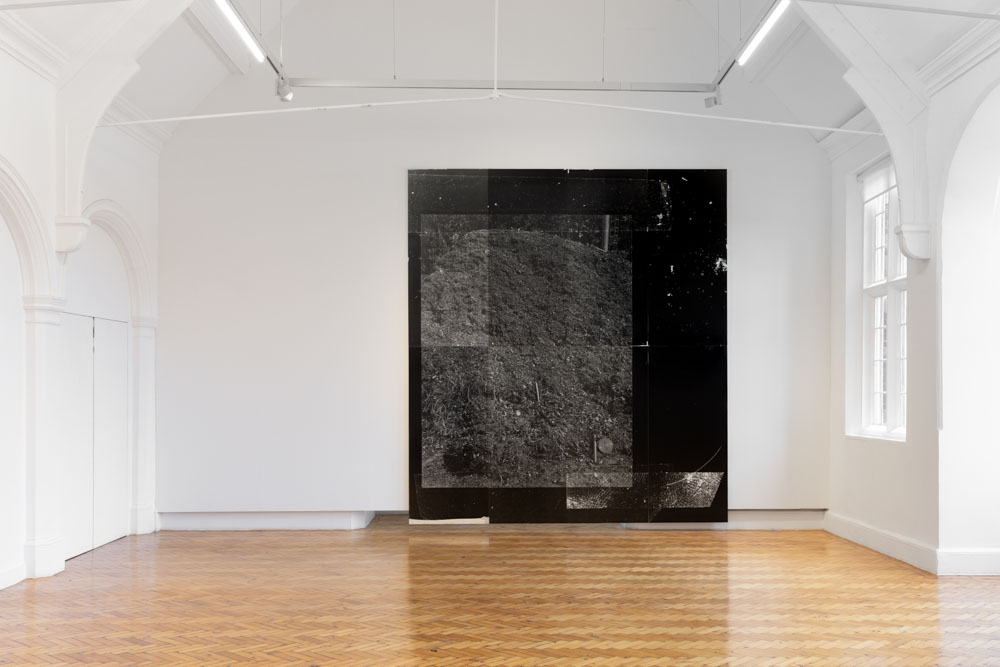
The main room is dominated by a massive multi-panel work entitled Aqua Fortis. The subject of the image is a pile of metallic waste – a reference to the material substrate of photography itself. But there’s more to this image than what it depicts. Faulkner uses strategies of extreme enlargement and fragmentation – as well as visible joins between panels, and traces of handling and surface damage – to challenge the seamless presentation of a ‘window’, one of photography’s foundational metaphors. Instead, our attention is drawn to the image as an object that has been handled and manipulated, with visible grain and traces of construction left obvious and explicit. It’s unclear whether we are looking at a print from a large format negative, or a reproduction of an existing print, and that ambiguity is a further refusal of the image’s conventional documentary claims. The work does not simply show matter; it enacts its own materiality.
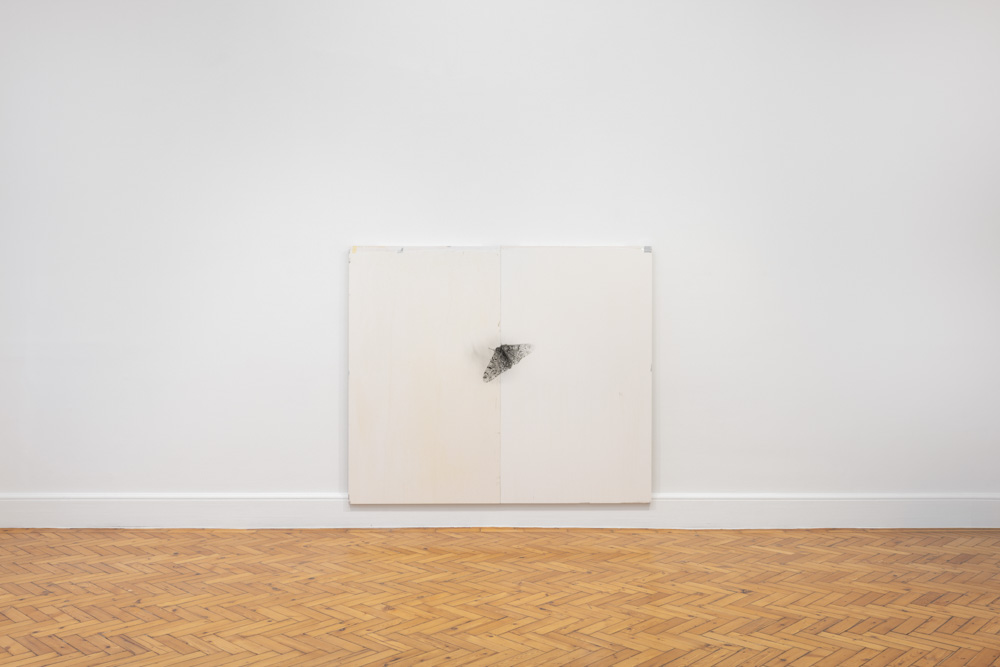
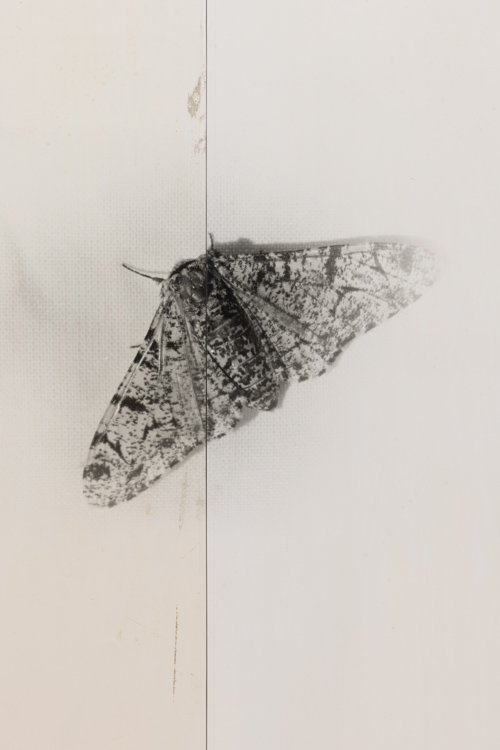
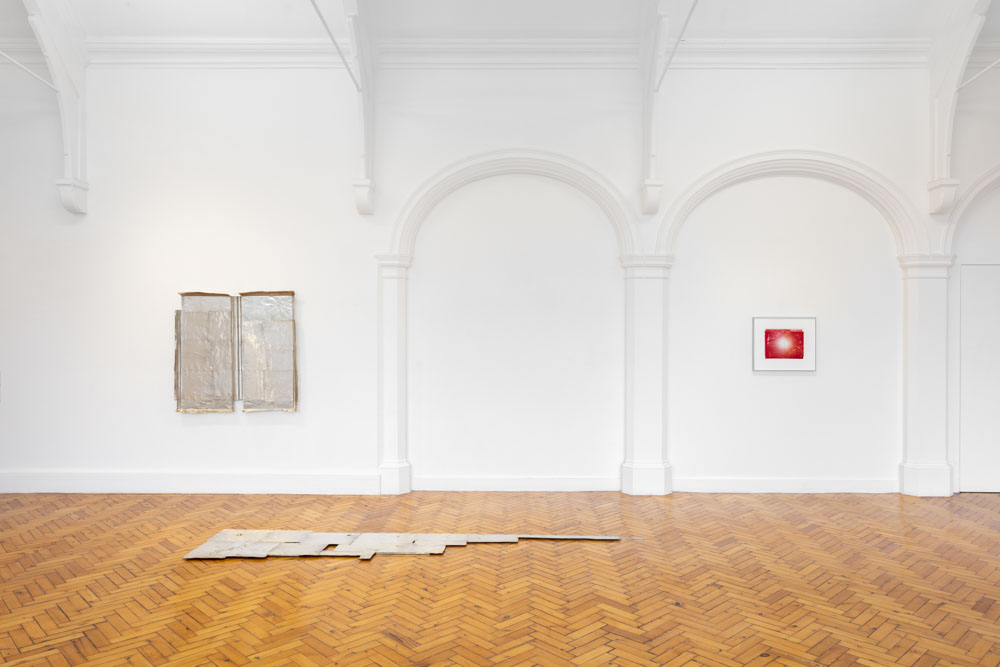
At the opposite end of the room is a two-panel image of a single moth – Biston Betularia, the ‘peppered moth’ that famously changed colour from white to black during the industrial revolution. Its transformation – brought about by environmental change – echoes the processes of transformation and adaptation that run through the exhibition, and link it directly to Aqua Fortis, its counterpart. As a creature drawn to light, the moth also slips easily into a photographic register, attraction acting as a subtle analogue for the medium’s own reliance on light. A smaller work, Moth Catcher, binds these threads together by presenting a burst of light itself as image, collapsing subject, lure and medium into one. At the same time, it evokes the darkroom safelight – visible to the eye, but imperceptible to photosensitive materials.
The density of reference in Faulkner’s photography never feels ornamental – it’s embedded in the substance of the work itself and the way it’s conceived and made.
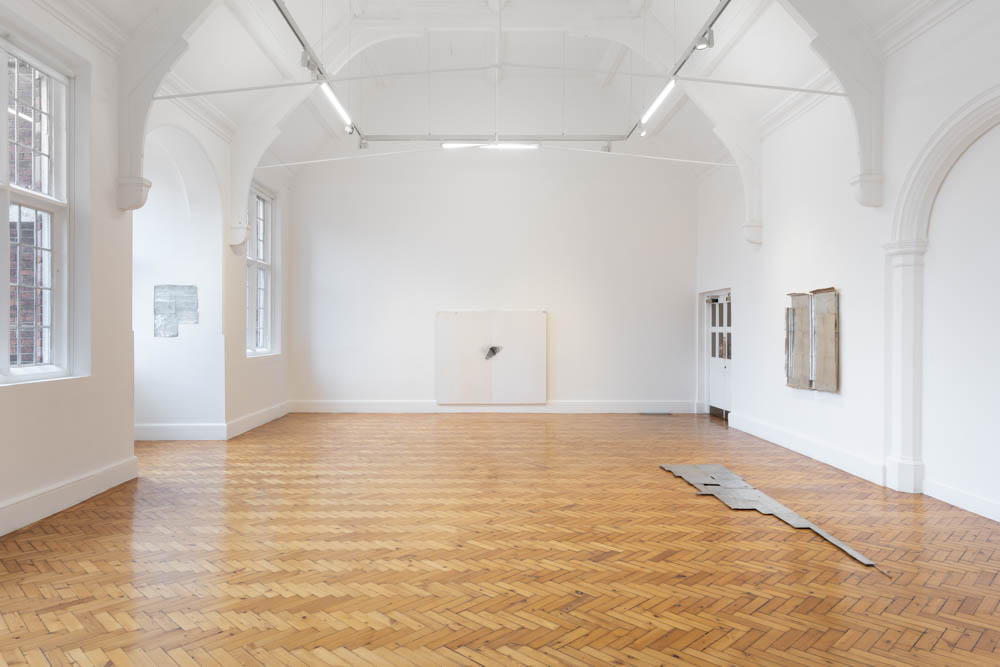
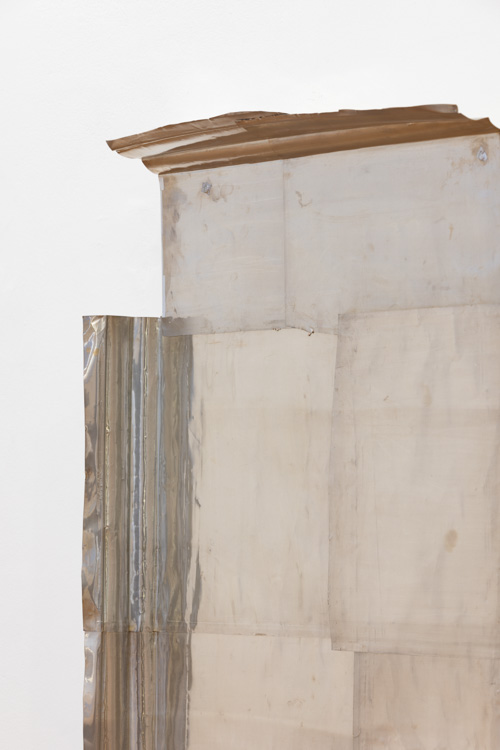
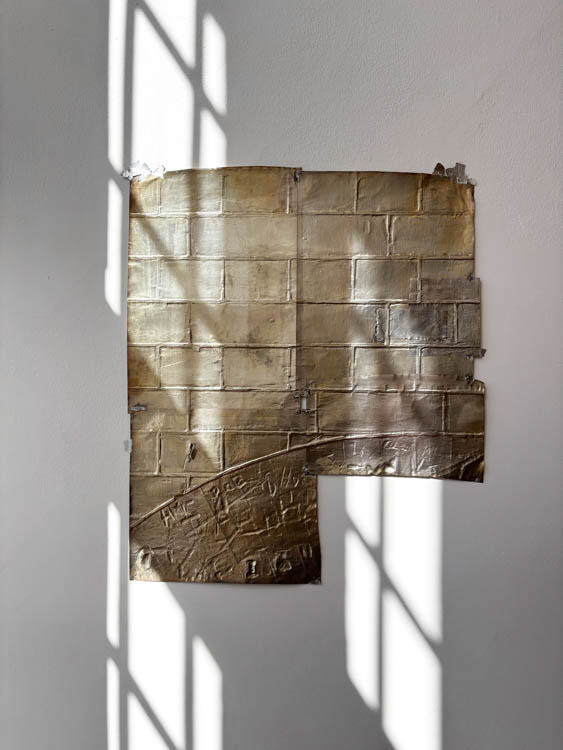
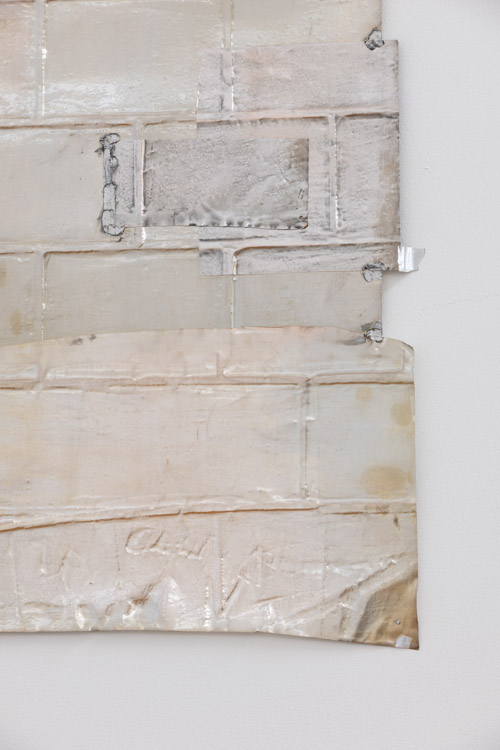
It’s in the three works titled Analogue that the connection to Silverman’s ideas really settles into place. Each begins with a simple action – sheets of copper, rubbed against a wall, a window and part of the floor in Faulkner’s studio, and electroplated with silver harvested from old NHS X-rays. What these pieces register isn’t resemblance in a metaphorical sense – they’re explicit enactments of Silverman’s insistence on analogy as physical contact and material transfer. Silver is historically central to photographic chemistry, and it returns here as a residue of medical imaging (an apparatus of interior vision), carrying with it the memory of the body it once described.
In bright sunshine, the Analogue works glow as though they’re illuminated from within, softly scattering light around the room. One – an almost complete impression of a window – offers a wavering reflection of the viewer in its polished surface. The distinction that curator John Szarkowski made in his 1978 book Mirrors and Windows – photography as subjective expression (mirror) or objective document (window) – doesn’t quite hold here. Instead, the two states flicker in and out of register, in constant transformation rather than fixed transparency or reflection. Though they’re not images as such, these works are undeniably photographic – points of contact where light, touch, and material trace coincide. Together, they embody a set of relations in which each element plays an equal part, bound together by what Silverman calls the ‘authorless and untranscendable similarities’ that structure Being itself.
I first read The Miracle of Analogy almost ten years ago, and while its claims made sense in theory, it was harder to see how they might take form in the world. Strong Water makes Silverman’s ideas legible, not by illustrating them, but by enacting them, drawing together light, matter and process into a tightly held network of material gestures. This density of reference never feels ornamental – it’s embedded in the substance of the work itself and the way it’s conceived and made. In this field, thick with significance, photography’s truth comes into view – not as evidence, but as the world’s way of revealing itself to us.
Nat Faulkner’s solo exhibition Strong Water took place at the Camden Art Center in London from January 16 – March 22 2026
Nat Faulkner
Camden Art Centre 2026